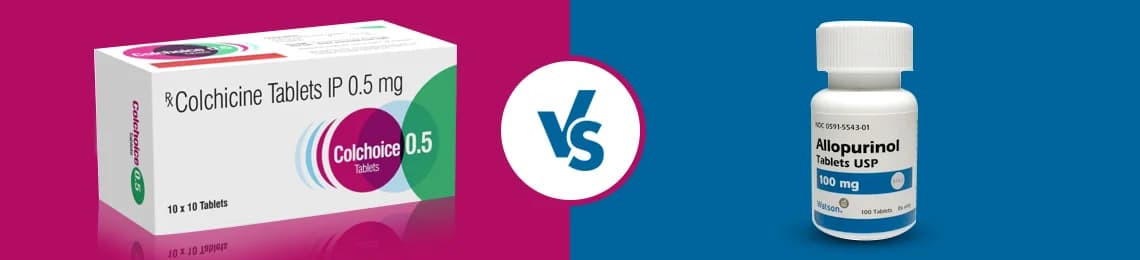
Colchicine vs Allopurinol
Drug Class
Primary Indication
Mechanism of Action
Administration Route
Typical Dosage
Common Side Effects
Serious Side Effects
Contraindications
Drug Interactions
Pregnancy Category
Onset of Action
Monitoring Parameters
Cost
Frequently Asked Questions
What is the main difference between Colchicine and Allopurinol?
+
Colchicine reduces inflammation during gout attacks, while Allopurinol lowers uric acid levels to prevent future attacks. Colchicine treats flare-ups; Allopurinol helps long-term control.
Can I take Colchicine and Allopurinol together?
+
Yes, doctors often prescribe them together. Colchicine can manage flare-ups when starting Allopurinol, as uric acid shifts may trigger attacks.
Which works faster: Colchicine or Allopurinol?
+
Colchicine works within hours to relieve pain and swelling. Allopurinol takes days to weeks to lower uric acid levels and prevent future flares.
Which drug has more side effects: Colchicine or Allopurinol?
+
Both have potential side effects. Colchicine may cause stomach upset and diarrhea, while Allopurinol can lead to rash, liver issues, or rare hypersensitivity reactions.
When should you not take Colchicine or Allopurinol?
+
Avoid Colchicine if you have severe kidney or liver disease. Don't start Allopurinol during an active gout attack unless directed by your doctor.