
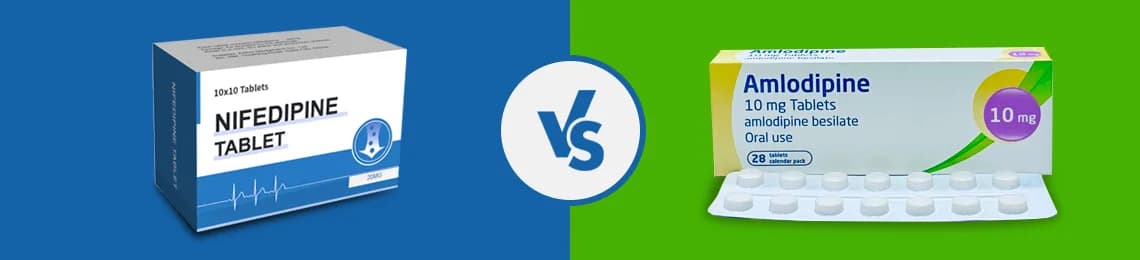
Nifedipine vs Amlodipine
Drug Class
Mechanism of Action
Primary Indications
Dosage Forms
Onset of Action
Metabolism
Excretion
Common Side Effects
Serious Side Effects
Contraindications
Drug Interactions
Pregnancy Category
Breastfeeding
Monitoring Parameters
Benefits
Cost
Frequently Asked Questions
What is the difference between Nifedipine and Amlodipine?
+
Nifedipine and Amlodipine are both calcium channel blockers used to treat high blood pressure and chest pain. Amlodipine has a longer half-life, offering more stable blood pressure control, while Nifedipine typically acts faster but may require multiple daily doses.
Which is better for high blood pressure, Nifedipine or Amlodipine?
+
Amlodipine is generally preferred for long-term management due to its once-daily dosing and sustained effect. Nifedipine may be used when quicker blood pressure reduction is needed but can cause more side effects like flushing or rapid heartbeat.
Can I switch from Nifedipine to Amlodipine?
+
Yes, switching is possible under medical supervision. Your doctor will determine the right dosage and monitor for any changes in blood pressure or side effects to ensure a smooth transition between the two medications.
Which has fewer side effects: Nifedipine or Amlodipine?
+
Amlodipine is usually better tolerated and causes fewer side effects like flushing or headaches. Nifedipine, especially in its short-acting form, may cause more pronounced side effects like rapid heart rate or swelling.
Do Nifedipine and Amlodipine interact with other medications?
+
Yes, both drugs can interact with other medications like beta-blockers, diuretics, and grapefruit juice. Always inform your doctor of all medications and supplements you\'re taking to avoid unwanted interactions.