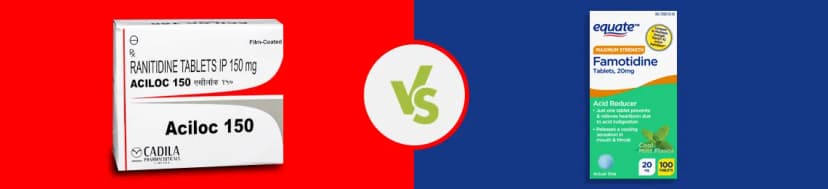
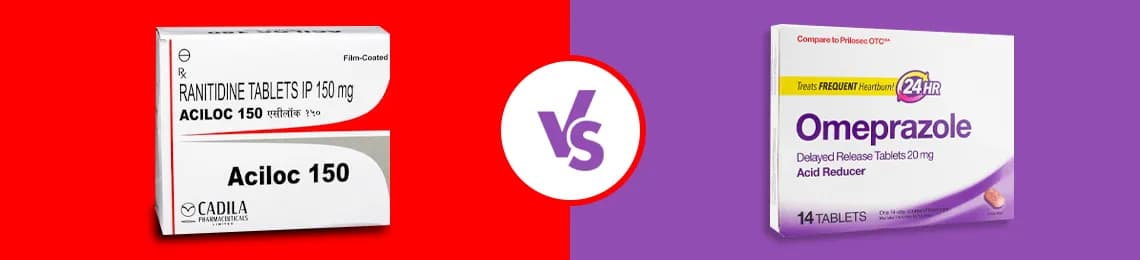
Ranitidine vs Omeprazole
Drug class
How it works
Primary uses
Strength of acid reduction
Onset of action
Duration of action
Dosing frequency
Best for
Use for long-term treatment
Availability
Prescription required
Cost without insurance
Common side effects
Serious side effects
Drug interactions
Use in pregnancy
Current safety status
Frequently Asked Questions
Which is stronger, ranitidine or omeprazole?
+
Omeprazole is stronger than ranitidine. It blocks acid production at the source, giving longer-lasting relief. Ranitidine works faster but reduces less acid overall, making it better suited for mild or occasional symptoms.
Is ranitidine still safe to use?
+
Ranitidine has been withdrawn or restricted in many countries due to safety concerns. It is no longer commonly recommended. Omeprazole is widely used and considered safe when taken as directed.
Can omeprazole be taken long term?
+
Yes, omeprazole is often used long term for GERD and ulcers. However, extended use should be monitored by a healthcare provider due to possible nutrient deficiencies or side effects.
Which works faster for heartburn relief?
+
Ranitidine usually works faster, often within an hour. Omeprazole takes longer to start working but provides stronger and longer relief once it builds up in the body.
Is omeprazole available over the counter?
+
Low-dose omeprazole is available over the counter in many regions. Higher strengths typically require a prescription, depending on local regulations.