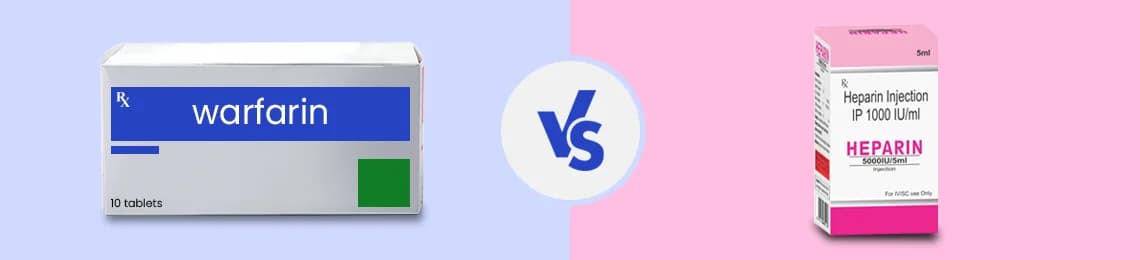
Warfarin vs Heparin
Classification
Mechanism of Action
Route of Administration
Onset of Action
Duration of Action
Monitoring Required
Reversal Agent
Indications
Use in Pregnancy
Half-life
Side Effects
Drug Interactions
Cost
Dosing
Dietary Considerations
Advantages
Disadvantages
Frequently Asked Questions
What is the main difference between Warfarin and Heparin?
+
Warfarin is an oral anticoagulant used for long-term blood clot prevention, while Heparin is usually given by injection and used for short-term or emergency clot treatment. Their onset, administration, and monitoring requirements differ.
Which works faster: Warfarin or Heparin?
+
Heparin works within minutes to hours, making it ideal for immediate blood thinning. Warfarin takes several days to become effective, so it\'s often started alongside Heparin initially.
Can Warfarin and Heparin be used together?
+
Yes, they are sometimes used together when beginning Warfarin therapy. Heparin provides quick protection while Warfarin builds up to a therapeutic level. Heparin is usually stopped once Warfarin becomes effective.
What are the side effects of Warfarin and Heparin?
+
Both can cause bleeding. Warfarin may also lead to skin bruising and requires regular INR monitoring. Heparin can cause low platelet counts and, in rare cases, heparin-induced thrombocytopenia (HIT), a serious reaction.