International Drug Mart

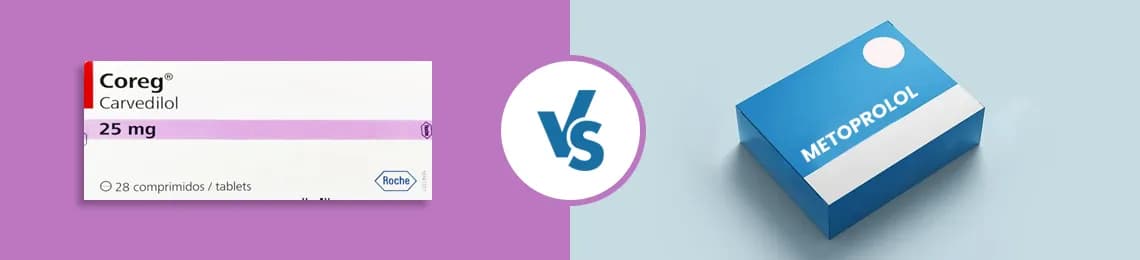
Coreg vs Metoprolol

Coreg vs Metoprolol

Drug Class

Non-Selective Beta-Blocker & Alpha-1 Blocker
Beta-1 Selective Beta-Blocker

Primary Indications

- Hypertension (high blood pressure) - Heart failure (reduces mortality) - Post-heart attack treatment
- Hypertension - Angina (chest pain) - Heart failure (Metoprolol succinate) - Post-heart attack prevention

Mechanism of Action

Blocks beta-1, beta-2, and alpha-1 receptors, reducing heart rate and relaxing blood vessels.
Blocks beta-1 receptors, slowing heart rate and reducing blood pressure.

Dosage Forms

Oral tablets (immediate and extended-release)
Oral tablets, extended-release tablets, IV injection

Common Dosages

- Hypertension: 6.25–25 mg twice daily - Heart failure: 3.125–50 mg twice daily
- Hypertension: 25–100 mg twice daily (IR), 25–200 mg once daily (ER) - Heart failure: 12.5–200 mg daily (ER)

Onset of Action

1–2 hours
1 hour (IR), 4–6 hours (ER)

Duration of Action

~12 hours (immediate-release) ~24 hours (extended-release)
IR: 6–12 hours ER: 24 hours

Half-Life

~7–10 hours
IR: 3–7 hours ER: 7–9 hours

Common Side Effects

- Fatigue - Dizziness - Low blood pressure - Weight gain
- Fatigue - Dizziness - Slow heart rate - Cold hands/feet

Serious Side Effects

- Bradycardia (slow heart rate) - Worsening heart failure - Severe hypotension
- Bradycardia - Low blood pressure - Shortness of breath - Depression

Pregnancy Category

Category C (Use with caution)

Controlled Substance

No
No

Addiction Potential

None
None

Drug Interactions

- Other beta-blockers - Blood pressure medications - CYP2D6 inhibitors (increase Coreg levels)
- Other beta-blockers - Calcium channel blockers - Digoxin (bradycardia risk)

Monitoring Parameters

- Blood pressure - Heart rate - Symptoms of heart failure

Withdrawal Symptoms

- Rebound hypertension - Increased heart rate
- Rebound hypertension - Chest pain - Increased heart rate

Cost and Availability

Generic available, moderately priced
Generic available, affordable

Special Considerations

- Affects both heart rate and blood vessel relaxation (alpha-blocking effect). - Can cause more dizziness and fatigue than Metoprolol.
- More cardio-selective (targets only beta-1 receptors). - Better tolerated in asthma/COPD patients.
Coupon
Coupon Code
IDMBLG30
Use This Coupon To Buy
Coupon Code
IDMBLG30
Use This Coupon To Buy

Frequently Asked Questions

What is the main difference between Coreg and Metoprolol?

+

Coreg (Carvedilol) blocks both beta and alpha receptors, reducing heart rate and relaxing blood vessels. Metoprolol is beta-1 selective, mainly slowing heart rate and lowering blood pressure without affecting blood vessel dilation.

Which medication is better for heart failure?

+

Both are used for heart failure, but Coreg is preferred for heart failure with reduced ejection fraction (HFrEF) because it also relaxes blood vessels. Metoprolol succinate (Toprol XL) is another effective option, especially for post-heart attack care.

Can Coreg or Metoprolol be taken by asthma or COPD patients?

+

Metoprolol is usually preferred in patients with asthma or COPD because it selectively targets beta-1 receptors. Coreg blocks beta-2 receptors, which can cause bronchoconstriction, making it riskier for respiratory conditions.

Which medication has fewer side effects?

+

Both can cause fatigue, dizziness, and low blood pressure, but Coreg may cause more dizziness and fatigue due to its alpha-blocking effect. Metoprolol may cause more cold hands/feet and slow heart rate.
Related Posts