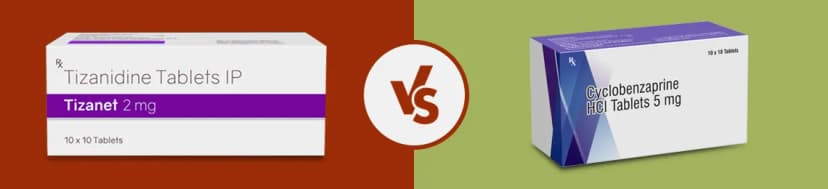
Tizanidine vs Flexeril

Drug Class
Mechanism of Action
Common Uses
Onset of Action
Duration of Action
Dosage Form
Typical Starting Dose
Common Side Effects
Serious Side Effects
Drug Interactions
Warnings
Pregnancy Category
Cost
Frequently Asked Questions
How long does a muscle relaxer last?
+
Most muscle relaxers last between 4 to 8 hours after taking a dose. Some, like Flexeril, may have longer effects and stay active in the body for up to 12 24 hours. The duration can vary based on the specific drug, your metabolism, and the dose prescribed. Always follow your doctor\'s directions carefully.
Which is stronger, Tizanidine or Flexeril?
+
Flexeril (cyclobenzaprine) is generally considered stronger for short-term muscle spasms, causing more noticeable sedation. Tizanidine is slightly milder but better suited for long-term muscle spasticity in conditions like multiple sclerosis. Strength depends on what type of muscle problem you have. Always consult your doctor to choose the medication that best matches your needs.
Will a muscle relaxer help with a headache?
+
Muscle relaxers may help with headaches if the pain is related to muscle tension or spasms, like in tension-type headaches. They are not usually the first treatment for migraines or cluster headaches. Doctors sometimes prescribe muscle relaxants short-term if neck or back muscle tightness is contributing to headache symptoms.
What is the main difference between Tizanidine and Flexeril?
+
Tizanidine and Flexeril (cyclobenzaprine) are both muscle relaxants, but they work slightly differently. Tizanidine is often used for muscle spasticity from conditions like multiple sclerosis or spinal injuries, while Flexeril is more commonly prescribed for short-term muscle spasms related to acute injuries. Tizanidine acts on alpha-2 receptors, while Flexeril works more like a tricyclic antidepressant in structure.
Which causes more drowsiness, Tizanidine or Flexeril?
+
Both Tizanidine and Flexeril can cause drowsiness, but Flexeril is usually associated with more sedation. Many users report feeling very sleepy or groggy after taking Flexeril. Tizanidine can also cause tiredness, but it may be a better choice for some people if they need a muscle relaxant with a slightly milder sedative effect. Always discuss side effects with your doctor.
Can I switch from Flexeril to Tizanidine?
+
Yes, switching from Flexeril to Tizanidine is possible if your doctor recommends it. They work differently, so the dosing and effect might not feel exactly the same. Tizanidine is usually taken more frequently throughout the day, while Flexeril is often taken once or twice daily. A healthcare provider will guide the switch to avoid withdrawal symptoms or overdose.