
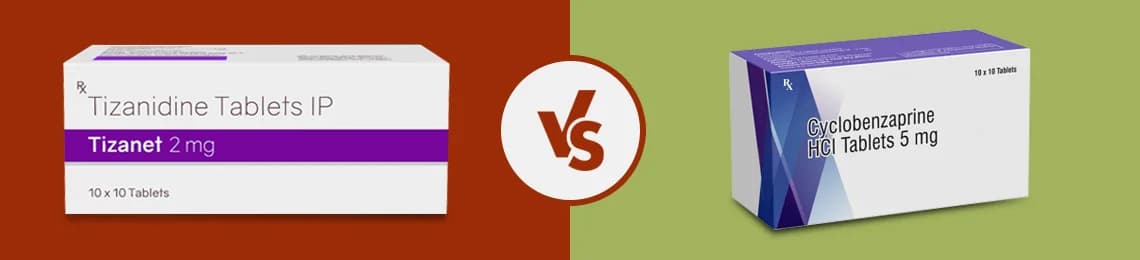
Tizanidine vs Cyclobenzaprine
Drug Class
Mechanism of Action
Indications
Dosage Forms
Onset of Action
Duration of Action
Common Dosage
Metabolism
Side Effects
Warnings
Pregnancy Category
Drug Interactions
Special Populations
Efficacy
Monitoring
Suitability for Long-Term Use
Frequently Asked Questions
Cyclobenzaprine vs Tizanidine which is stronger?
+
Cyclobenzaprine and Tizanidine are both strong muscle relaxants, but their strength depends on the condition being treated. Cyclobenzaprine is often preferred for acute muscle spasms, while Tizanidine is commonly used for chronic spasticity. Tizanidine may be slightly more potent in some cases, but it also has a shorter duration. Doctor guidance helps determine the best choice.
Which is better for muscle spasms, Tizanidine or Cyclobenzaprine?
+
Both Tizanidine and Cyclobenzaprine are effective muscle relaxants. Cyclobenzaprine is often used for short-term relief, while Tizanidine may be preferred for long-term spasticity. The better choice depends on the condition, response to treatment, and side effects.
What are the side effects of Tizanidine vs Cyclobenzaprine?
+
Tizanidine commonly causes drowsiness, dry mouth, and low blood pressure. Cyclobenzaprine can also cause drowsiness, dizziness, and dry mouth but may lead to more sedation. Tizanidine may be better tolerated in some people.
Can you take Tizanidine and Cyclobenzaprine together?
+
No, taking Tizanidine and Cyclobenzaprine together is generally not recommended. Both are muscle relaxants and may increase the risk of excessive sedation, dizziness, or other side effects. Always consult your doctor before combining them.
Which works faster: Tizanidine or Cyclobenzaprine?
+
Tizanidine typically starts working within 1 to 2 hours, while Cyclobenzaprine may take slightly longer. However, onset can vary between individuals. Both drugs should be taken as prescribed for best results.