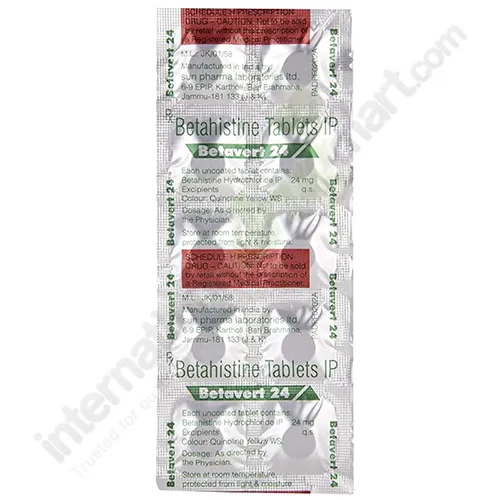

What is Betahistine 8mg used for?
Betahistine 8mg is prescribed to relieve dizziness (vertigo), ringing in the ears (tinnitus), and hearing difficulties associated with Ménière’s disease. It works by improving blood flow in the inner ear, helping to reduce pressure build-up that causes balance problems. Your doctor may also recommend it for other conditions if clinically appropriate.
What are the side effects of Betahistine 8mg?
Like all medicines, Betahistine 8mg may cause side effects, though not everyone experiences them. Most are mild and short-lived, but some may be more serious and require medical attention. Common side effects include headache, nausea, and stomach discomfort. If symptoms persist or worsen, contact your doctor straight away. Always follow medical advice carefully when using Betahistine.
What is the recommended dosage of Betahistine?
The dosage of Betahistine varies between individuals, depending on the condition and response to treatment. Always take it exactly as your doctor prescribes or as stated on the pharmacy label. To help prevent stomach upset, take Betahistine with meals. Never increase or decrease your dose without consulting your doctor first.
What if you miss a dose of Betahistine?
If you forget to take a dose, take it as soon as you remember. If it’s nearly time for your next dose, skip the missed one and continue as normal. Do not double up to make up for a missed dose. Consistency is key, so try to take it at the same time each day.
What if you take too much Betahistine?
Taking more than the prescribed dose can be harmful. If you think you have taken too much Betahistine, seek immediate medical help or visit the nearest hospital. Keep the packaging with you to show healthcare professionals. Always store your medication safely and out of reach of children.
What other drugs could interact with Betahistine 8mg?
Certain medicines may interact with Betahistine and affect how it works. These include:
-
Cimetidine (for stomach ulcers or acid reflux)
-
Diphenhydramine (an antihistamine)
-
Meclizine (for motion sickness)
Betahistine can also interact with other antihistamines, which may reduce its effectiveness. Inform your doctor about any prescription, over-the-counter, or herbal medicines you take, as well as vitamins or supplements. Avoid alcohol, caffeine, and smoking, as these may interfere with treatment. Never start or stop any medicine without medical guidance.
FAQ's
What drugs should not be taken with Betahistine 8mg?
You should avoid taking Betahistine 8mg with medicines such as antihistamines, Cimetidine, Meclizine, or Diphenhydramine, as they may reduce its effect. Always tell your doctor about any other prescription or over-the-counter medicines, herbal products, or vitamins you take. Mixing certain medicines can cause unwanted side effects or reduce treatment effectiveness.
How long does Betahistine 8mg take to work?
Betahistine 8mg doesn’t work immediately. Most people start noticing improvement in dizziness or ringing in the ears after a few weeks, though full benefits may take several months. It’s important to keep taking it regularly as advised by your doctor, even if you don’t feel better straight away. Patience and consistency matter.
Does Betahistine 8mg lower blood pressure?
Betahistine 8mg isn’t used to treat high blood pressure and doesn’t usually lower it. However, it helps improve blood flow in the inner ear, easing pressure that causes dizziness and balance problems. If you have concerns about blood pressure changes while taking Betahistine, discuss them with your doctor promptly.
Is Betahistine 8mg an antihistamine?
No, Betahistine 8mg isn’t a standard antihistamine. Instead, it’s a histamine analogue—it acts like histamine to improve circulation in the inner ear. This helps relieve symptoms of Ménière’s disease such as vertigo, tinnitus, and hearing loss. Unlike traditional antihistamines, Betahistine does not cause drowsiness or dry mouth.