Albendazole information
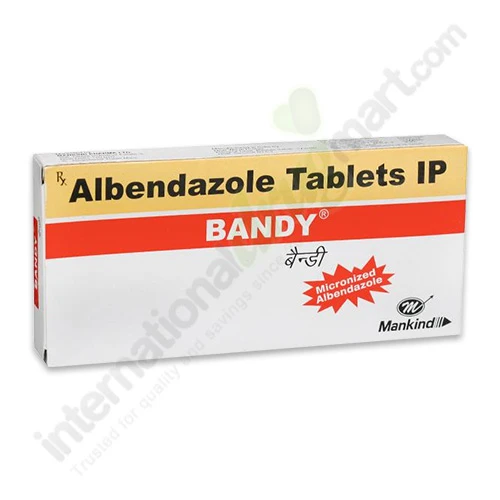
Albendazole is a benzimidazole anthelmintic that blocks a parasite's glucose uptake, cutting off its energy supply so it weakens and is cleared from the body. Its primary labeled indications are neurocysticercosis and cystic hydatid disease (used alongside surgery); it's also widely used — including in WHO-backed deworming programs — for intestinal worm infections like roundworm, hookworm, whipworm, and pinworm, though this broader use may be labeled differently depending on region and product.What is Albendazole 400mg used for?
Albendazole 400mg is an anti-worm (anthelmintic) medication used to treat a range of parasitic infections, including intestinal worm infections (roundworm, hookworm, whipworm, pinworm) and tapeworm-related conditions such as pork tapeworm infection, dog tapeworm-related hydatid disease, and neurocysticercosis. It works by preventing worms from growing or multiplying in the body. This medicine may also be used to treat other conditions as determined by your doctor.Quick Details
| Attribute | Detail |
|---|---|
| Composition | Albendazole 400mg |
| Drug class | Anthelmintic (Benzimidazole) |
| Form | Tablet, strip pack (confirm chewable vs. swallow-only per your actual product packaging) |
| Common uses | Roundworm, hookworm, whipworm, pinworm, tapeworm infections; also used for hydatid disease and neurocysticercosis under specialist care |
| Typical adult dose | Single 400mg dose for common worm infections; twice-daily, longer-duration regimens apply to hydatid disease and neurocysticercosis. Exact dose and duration depend on infection type — confirm against your product's label. |
| Administration | Oral, preferably with food (especially fatty meals) |
| Onset | Symptom relief typically within a few days; full parasite clearance may take 1–3 weeks |
| Prescription status | Prescription medicine in most regions |
| Storage | Room temp, away from moisture/sunlight; keep out of reach of children; discard expired tablets via pharmacy take-back |
Quick Tips
- Take with a fatty meal to improve absorption.
- Complete the full course, even if symptoms improve early.
- Maintain hygiene (handwashing, short nails, hot-wash bedding) to prevent reinfection.
- A follow-up dose may be advised for pinworm, since household reinfection is common.
- Avoid alcohol during treatment (see Interactions below).
How to Take Albendazole 400mg
- Take orally with food — many regimens call for twice a day, but frequency and duration depend on the infection being treated, so follow your product's label or prescriber's instructions.
- Take as directed on your product's label — some formulations are chewed, others swallowed whole or crushed; confirm which applies to your specific packaging.
- Keep to the same time daily for multi-day courses.
- Complete the full course, even if symptoms resolve early.
- Missed dose: take when remembered, unless it's near the next dose — then skip it, don't double up.
How to Use Albendazole 400mg
| Infection Type | Typical Regimen | Notes |
|---|---|---|
| Roundworm, hookworm, pinworm | Single 400mg dose | Repeat after 2–3 weeks if reinfection suspected |
| Whipworm (Trichuris trichiura) | Often requires a 3-day course rather than a single dose | Single-dose cure rates are notably lower for whipworm than for other intestinal worms |
| Pinworm (household exposure) | Single dose, often whole household | Breaks reinfection cycle |
| Hydatid disease | Extended course, specialist-set | Needs periodic liver/blood monitoring |
| Neurocysticercosis | Extended, specialist-supervised | Often paired with steroids/anti-seizure meds |
| Mass deworming programs | Single supervised dose | Per public health protocol |
Who Should Take Albendazole 400mg
Generally prescribed for:
- Diagnosed intestinal worm infections (roundworm, hookworm, whipworm, pinworm)
- Tapeworm-related conditions (cysticercosis, hydatid disease), under specialist care
- People in endemic regions as part of public health deworming
- Household members of a diagnosed patient, when whole-household treatment is advised
Caution or avoidance advised for:
- Pregnant women (especially first trimester) unless benefit outweighs risk
- Those with liver disease or abnormal liver function
- Those with a history of bone marrow suppression/blood disorders
- Children below the age/weight threshold without doctor-confirmed dosing
Benefits
- Broad-spectrum: Treats multiple worm types in one medicine.
- Convenient: Many infections resolved with a single dose.
- Symptom relief: Eases abdominal pain, bloating, diarrhea, fatigue.
- Prevents complications: Helps avoid anemia, malnutrition, intestinal blockage.
- Well-established safety profile: Decades of clinical and WHO-backed use.
- Improves nutrient absorption: Post-treatment digestion typically improves.
What are the side effects of Albendazole 400mg?
Common — tell your doctor if severe or persistent:- Stomach pain
- Nausea
- Vomiting
- Headache
- Dizziness
- Reversible hair loss
- Sore throat, fever, chills, and other signs of infection
- Unusual bleeding or bruising
- Weakness
- Fatigue
- Pale skin
- Shortness of breath
- Rash
- Hives
How to Take Care of Side Effects
Most side effects are mild and temporary:- Nausea: Take with food; smaller, bland meals help.
- Headache/dizziness: Rest, hydrate, avoid driving until it passes.
- Temporary hair thinning: Usually reversible after the course ends.
- Abdominal pain: Often mild; food with the dose can help.
Interaction with Other Drugs
Share your full medication list with your doctor/pharmacist before starting. Notable interactions:- Corticosteroids (e.g., dexamethasone) — can raise Albendazole blood levels.
- Cimetidine — may increase Albendazole concentration.
- Praziquantel — can alter Albendazole metabolism when combined.
- Grapefruit juice — a theoretical/precautionary interaction rather than a firmly established one for Albendazole specifically; mentioned out of caution and best confirmed against your product's label rather than treated as settled.
- Anti-seizure drugs (phenytoin, carbamazepine) — may reduce effectiveness.
- Other liver-affecting drugs / alcohol — added liver strain; alcohol best avoided during treatment.
- Not exhaustive: A pharmacist should review full medication history before dispensing.
What are the dosage guidelines for Albendazole?
Dosing varies from patient to patient, so always go by what your doctor has prescribed and/or what's stated on your prescription label. Albendazole is best taken with food. If you're on a fixed dosing schedule and forget a dose, take it as soon as you remember. If it's close to your next scheduled dose, skip the one you missed and continue with your regular schedule — don't take a double dose unless your doctor specifically tells you to. Taking more than the recommended amount can lead to serious health effects. If you think an overdose has occurred, get medical help right away.Pregnancy & Breastfeeding
Pregnancy: Generally avoided, especially in the first trimester, due to potential fetal risk seen in animal studies. A negative pregnancy test is typically required before starting treatment, and pregnancy should be avoided during treatment and for a short period (guidance commonly cites about 3 days) after the final dose. Trying to conceive: Effective contraception is advised during treatment and for that same post-treatment window. Breastfeeding: Limited data on passage into breast milk; doctors weigh infection severity against theoretical risk."Always disclose pregnancy/breastfeeding status to the prescriber — never self-decide."
Safety Advice and Warnings
- Liver function: May be tested before/during longer courses.
- Blood counts: Extended use can affect white cells/platelets; monitoring may be advised.
- Pregnancy/breastfeeding: Use only if doctor-advised; contraception generally recommended.
- Allergy history: Disclose any past reaction to Albendazole or related anthelmintics.
- Neurocysticercosis patients: Dying parasites can trigger headaches/seizures — often managed with co-prescribed steroids/anti-seizure meds.
- Driving/machinery: Avoid if dizziness or drowsiness occurs.
- Avoid repeated self-medication: Recurrent infections should be evaluated by a doctor, not repeatedly self-treated.