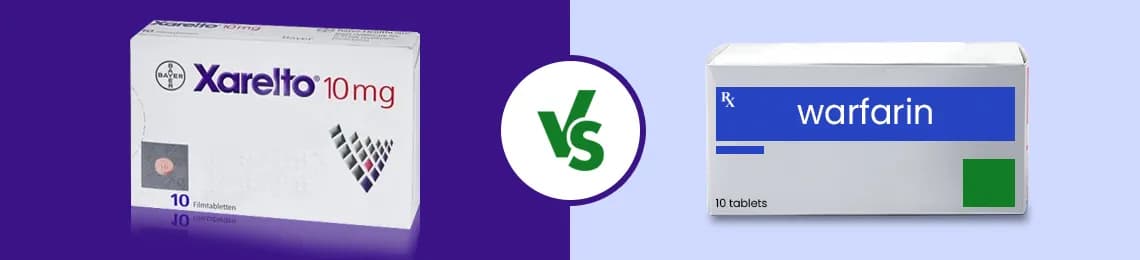
Xarelto vs Warfarin
Drug Class
Direct Factor Xa Inhibitor (DOAC)
Vitamin K Antagonist
Primary Indications
- Stroke prevention in atrial fibrillation (AFib) - Deep vein thrombosis (DVT) and pulmonary embolism (PE) treatment & prevention - Post-surgical DVT prevention
- Stroke prevention in atrial fibrillation (AFib) - DVT and PE treatment & prevention - Heart valve replacement (mechanical valves)
Mechanism of Action
Directly inhibits Factor Xa, preventing thrombin formation and clotting
Inhibits vitamin K-dependent clotting factors (II, VII, IX, X), reducing blood clotting
Dosage Forms
Oral tablets
Oral tablets
Common Dosages
- DVT/PE: 15 mg twice daily for 21 days, then 20 mg once daily - AFib: 20 mg once daily with food
- Typically 2–10 mg once daily (dosing individualized based on INR)
Onset of Action
2–4 hours
24–72 hours
Duration of Action
~24 hours
Varies (dependent on INR levels)
Half-Life
5–9 hours (healthy individuals) 11–13 hours (elderly)
20–60 hours
Monitoring Requirements
No routine blood monitoring required
Requires regular INR blood monitoring
Dietary Restrictions
No major dietary restrictions
Avoid foods high in vitamin K (e.g., leafy greens) as they affect INR levels
Common Side Effects
- Bleeding - Nausea - Dizziness - Fatigue
- Bleeding - Bruising - Hair loss - Nausea
Serious Side Effects
- Major bleeding (GI, intracranial) - Spinal hematoma (if combined with spinal procedures)
- Severe bleeding - Skin necrosis - Purple toe syndrome
Reversal Agent
Andexanet alfa (Andexxa) (Expensive, limited availability)
Vitamin K, Fresh Frozen Plasma (FFP), Prothrombin Complex Concentrates (PCCs)
Pregnancy Category
Category C (Risk not ruled out)
Category X (Contraindicated in pregnancy)
Drug Interactions
- CYP3A4 and P-gp inhibitors (ketoconazole, ritonavir) increase bleeding risk - NSAIDs and antiplatelets increase bleeding risk
- Many drug interactions (antibiotics, antifungals, NSAIDs, alcohol, thyroid medications, etc.)
Monitoring Parameters
- Signs of bleeding - Kidney function (renal clearance affects dosage)
- INR (2.0–3.0 for most indications, 2.5–3.5 for mechanical valves)
Cost and Availability
Expensive, brand-name only
Affordable, available as generic
Special Considerations
- No routine monitoring needed - Not recommended in severe kidney disease
- Requires frequent INR monitoring - Affected by diet and many drug interactions
Coupon
Frequently Asked Questions
What is the difference between Xarelto and Warfarin?
+
Both are blood thinners. They help stop clots. But Warfarin needs regular blood tests and food changes. Xarelto doesn't need as much watching. That makes it easier for many people.
Is Xarelto safer than Warfarin?
+
Xarelto may have fewer bleeding risks in some people, but not always. Warfarin has been used for many years and is safe when watched closely. Your doctor will help choose what's safest for you.
Do I need blood tests with Xarelto like I do with Warfarin?
+
No. Xarelto usually doesn't need regular blood checks. But Warfarin does. With Warfarin, your blood must stay in a certain range, so doctors test it often.
Can I switch from Warfarin to Xarelto?
+
Yes, but only with a doctor's help. Switching needs careful timing to keep your blood safe from clots or bleeding. Never change your medicine without medical advice.