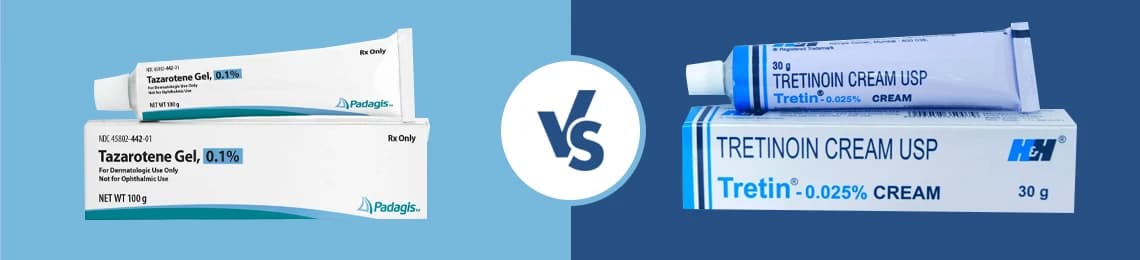
Tazarotene vs Tretinoin
What it is
Primary uses
Off-label uses
Available strengths
Potency
Results timeline
Irritation level
Best for skin concerns
Skin sensitivity profile
Pregnancy safety
Breastfeeding
Drug interactions
How to use
Cost & availability
Who it suits most
Frequently Asked Questions
Which is stronger, tazarotene or tretinoin?
+
Tazarotene is generally stronger and more targeted, making it better for stubborn acne and thicker, rough skin. Tretinoin is effective but milder, so beginners or sensitive skin users tolerate it more easily. Both improve acne, texture, and fine lines, but tazarotene often shows faster results with a higher chance of irritation.
Which works faster for acne—tazarotene or tretinoin?
+
Tazarotene usually works faster because of its stronger comedolytic action. Many people see early improvement within 4–8 weeks. Tretinoin results appear more gradually, often around 6–12 weeks. Your skin type and tolerance should guide the choice, as faster results with tazarotene can come with more dryness and peeling.
Which is better for sensitive skin?
+
Tretinoin is generally better for sensitive or reactive skin because it causes less irritation. It comes in multiple strengths and vehicle types, giving users more flexibility. Tazarotene is powerful but can be too harsh for beginners or those with easily irritated skin. Dermatologists often recommend starting with tretinoin first.
Can tazarotene and tretinoin be used together?
+
Both are retinoids, so they should not be used together. Layering them increases redness, peeling, and dryness without added benefit. A dermatologist may switch you from one to the other, but never at the same time. Choose one retinoid based on your skin goals, tolerance, and medical advice.
Which is safer during pregnancy—tazarotene or tretinoin?
+
Tazarotene should never be used in pregnancy because of clear safety concerns. Tretinoin is also generally avoided, even though absorption is low. If you are pregnant, planning pregnancy, or breastfeeding, stop all retinoids and ask your doctor for alternatives such as azelaic acid or glycolic acid.