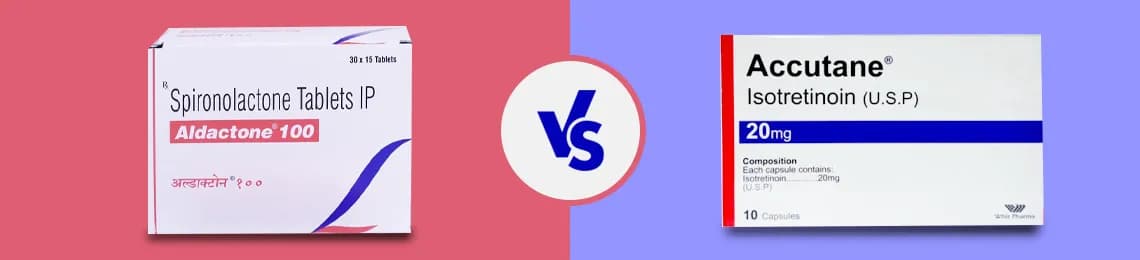
Spironolactone vs Accutane
Drug Class
Aldosterone receptor antagonist, potassium-sparing diuretic
Retinoid (Vitamin A derivative)
Primary Use
- Treats hormonal acne (off-label) - Manages high blood pressure, heart failure, and hyperaldosteronism
- Severe nodular or cystic acne unresponsive to other treatments
Mechanism of Action
Blocks androgen receptors and reduces androgen production, decreasing oil production in the skin
Reduces sebaceous gland size and sebum production; has anti-inflammatory effects
FDA Approval for Acne
No (off-label use)
Yes
Common Dosage
25–200 mg daily
0.5–1 mg/kg/day in divided doses
Administration
Oral
Oral
Duration of Treatment
Can be long-term for acne maintenance
Typically 4–6 months
Effectiveness
Best for hormonal acne, particularly in women
Effective for all types of severe acne, including scarring acne
Onset of Action
6–8 weeks
8–12 weeks
Side Effects
- Hyperkalemia - Menstrual irregularities - Breast tenderness - Dizziness
- Dry skin and lips - Birth defects (if used during pregnancy) - Increased liver enzymes - Mood changes
Monitoring
Requires potassium and kidney function monitoring
Requires liver function tests, lipid panels, and pregnancy tests (for females of childbearing potential)
Use in Pregnancy
Contraindicated (Category C)
Contraindicated (Category X)
Cost
Generally low (generic available)
Higher cost (varies based on brand or generic availability)
Drug Interactions
- ACE inhibitors - ARBs - NSAIDs - Potassium supplements
- Vitamin A supplements - Tetracycline antibiotics - Alcohol
Long-Term Use
Safe for long-term use under medical supervision
Not recommended beyond prescribed course
Availability
Widely available
Prescription-only; tightly regulated
Coupon