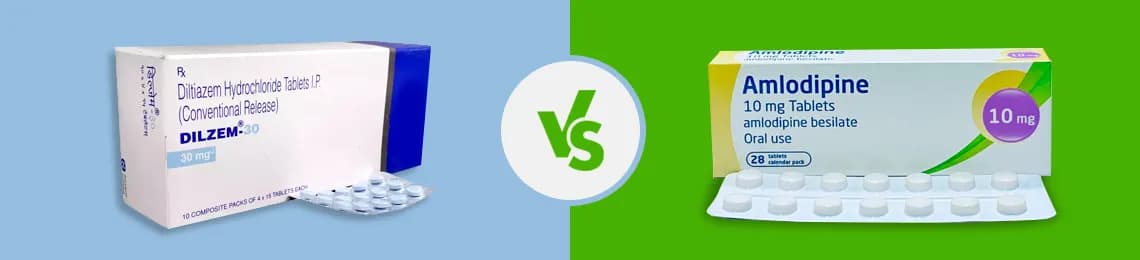
Diltiazem vs Amlodipine
Drug class
Primary use
How it works
Effect on heart rate
Best for
Common brand names
Available forms
Typical dosing
Dosing frequency
Onset of action
Duration of effect
Common side effects
Serious side effects
Effect on swelling (edema)
Use in arrhythmia
Drug interactions
Safe in heart failure?
Grapefruit interaction
Prescription required
Cost without insurance
Generic availability
Which is stronger for BP?
Frequently Asked Questions
What is the main difference between diltiazem and amlodipine?
+
Diltiazem lowers blood pressure and also slows the heart rate, while amlodipine mainly relaxes blood vessels without affecting heart rate. This makes diltiazem useful for certain heart rhythm problems.
Which is better for high blood pressure, diltiazem or amlodipine?
+
Both are effective for high blood pressure. Amlodipine is often preferred for long-term BP control due to once-daily dosing, while diltiazem is chosen when heart rate control is also needed.
Does amlodipine cause more swelling than diltiazem?
+
Yes. Amlodipine is more likely to cause ankle or foot swelling. Diltiazem has a lower risk of swelling but may cause a slow heart rate in some people.
Can diltiazem and amlodipine be taken together?
+
They are not usually taken together because both lower blood pressure. Using them together may increase the risk of low blood pressure or heart-related side effects unless closely monitored by a doctor.
Which is safer for long-term use?
+
Both diltiazem and amlodipine are considered safe for long-term use when taken as prescribed. The safer option depends on the patient’s heart condition, other medicines, and overall health.