
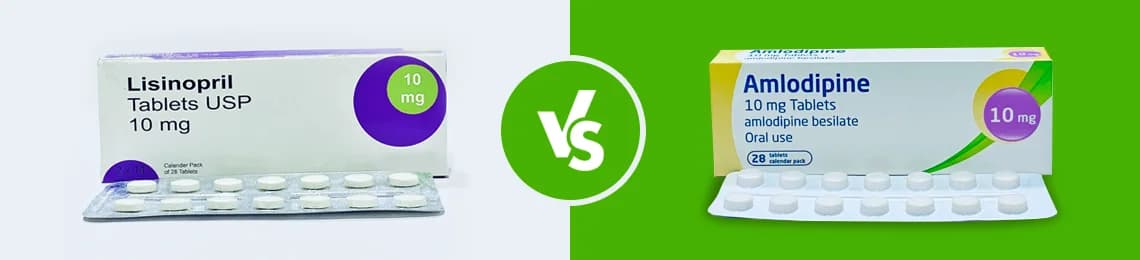
Lisinopril vs Amlodipine
Drug Class
Mechanism of Action
Uses
Dosage Forms
Common Side Effects
Serious Side Effects
Special Precautions
Drug Interactions
Pregnancy Category
Effect on Heart Rate
Kidney Function Impact
Half-Life
Frequency of Dosing
Metabolism
Cost
Brands
Frequently Asked Questions
What is the difference between Lisinopril and Amlodipine?
+
Lisinopril is an ACE inhibitor that relaxes blood vessels by blocking a hormone that causes them to tighten. Amlodipine is a calcium channel blocker that prevents calcium from entering heart and blood vessel cells, helping them relax. Both lower blood pressure but work through different mechanisms.
Which is better for high blood pressure: Lisinopril or Amlodipine?
+
Both are effective, but they work differently. Lisinopril may be preferred for people with heart failure or diabetes, while Amlodipine is often chosen for patients with angina or African ancestry. Your doctor will recommend the best option based on your health needs and how you respond to treatment.
Can I take Lisinopril and Amlodipine together?
+
Yes, doctors sometimes prescribe both together to better control high blood pressure. Using different classes of medications can provide a stronger blood pressure-lowering effect with fewer side effects. Always follow your healthcare provider's guidance when combining medications.
What are the side effects of Lisinopril vs Amlodipine?
+
Lisinopril may cause a dry cough, dizziness, or high potassium. Amlodipine commonly causes swelling in the ankles, flushing, or headaches. Severe side effects are rare, but tell your doctor if you notice anything unusual while taking either medicine.
Which works faster: Lisinopril or Amlodipine?
+
Amlodipine generally starts working within a few hours, but its full effect may take 1 2 weeks. Lisinopril may take several hours to begin lowering blood pressure, with peak effects seen in 6 8 hours. Both drugs are taken daily for steady control.