International Drug Mart

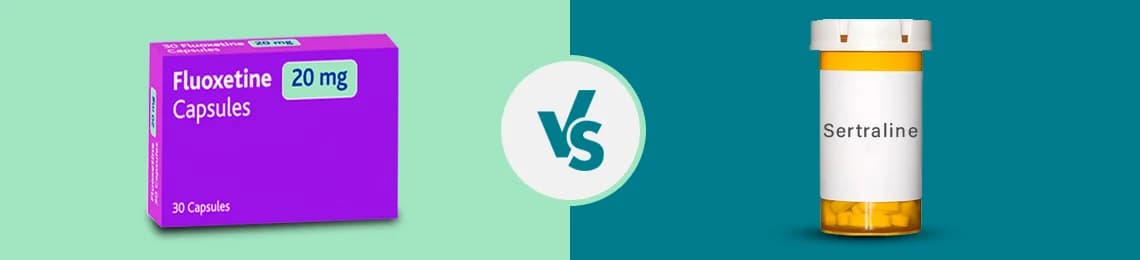
Fluoxetine vs Sertraline
Fluoxetine vs Sertraline

Drug Class

Selective Serotonin Reuptake Inhibitor (SSRI)

Mechanism of Action

Increases serotonin levels by inhibiting its reuptake in the brain.

Primary Indications

Major Depressive Disorder (MDD) - Obsessive-Compulsive Disorder (OCD) - Bulimia Nervosa - Panic Disorder - Premenstrual Dysphoric Disorder (PMDD)
Major Depressive Disorder (MDD) - Obsessive-Compulsive Disorder (OCD) - Panic Disorder - Post-Traumatic Stress Disorder (PTSD) - Social Anxiety Disorder (SAD) - Premenstrual Dysphoric Disorder (PMDD)

Dosage Forms

Capsules, tablets, oral solution (10 mg, 20 mg, 40 mg)
Tablets, oral solution (25 mg, 50 mg, 100 mg)

Usual Dosage

Initial: 10–20 mg/day; Max: 80 mg/day
Initial: 25–50 mg/day; Max: 200 mg/day

Onset of Action

4–6 weeks for full effect

Duration of Effect

Long-lasting due to active metabolite (7–9 days)
Shorter (about 24 hours)

Half-Life

4–6 days (active metabolite: up to 16 days)
22–36 hours

Metabolism

Liver (CYP2D6)
Liver (CYP2B6, CYP2C19)

Excretion

Urine and feces
Urine and feces

Common Side Effects

- Nausea - Insomnia - Drowsiness - Dry mouth - Sweating - Sexual dysfunction
Nausea - Diarrhea - Insomnia - Dry mouth - Sweating - Sexual dysfunction

Serious Side Effects

Serotonin syndrome - Suicidal thoughts - Seizures - QT prolongation
Serotonin syndrome - Suicidal thoughts - Seizures - Hyponatremia

Contraindications

MAO inhibitors - Pimozide - Thioridazine - Hypersensitivity
MAO inhibitors - Pimozide - Disulfiram (oral solution) - Hypersensitivity

Drug Interactions

MAOIs: Risk of serotonin syndrome - NSAIDs: Increased bleeding risk - CYP2D6 inhibitors: Altered metabolism
MAOIs: Risk of serotonin syndrome - NSAIDs: Increased bleeding risk - CYP3A4 inhibitors: Altered metabolism

Use in Special Populations

Caution in liver impairment - Lower doses for elderly
Caution in liver impairment - Monitor sodium in elderly

Pregnancy Category

Category C
Category C

Breastfeeding

Can be passed into breast milk; monitor infant for side effects

Monitoring Parameters

Mood changes - Signs of serotonin syndrome - QT prolongation risks
Mood changes - Signs of serotonin syndrome - Sodium levels (elderly)

Benefits

Long half-life reduces withdrawal risk - Effective for bulimia and PMDD
Broad spectrum for anxiety disorders - Effective for OCD and PTSD

Drawbacks

Higher risk of QT prolongation - Longer washout period (5 weeks for MAOIs)
Higher risk of hyponatremia - Requires gradual dose adjustment

Cost

Generally affordable; available as generic

Key Differences

Longer half-life; requires less frequent dosing
Shorter half-life; quicker to clear - Approved for PTSD and SAD
Coupon
Coupon Code
IDMBLG30
Use This Coupon To Buy
Coupon Code
IDMBLG30
Use This Coupon To Buy

Frequently Asked Questions

What is the difference between Fluoxetine and Sertraline?

+

Fluoxetine (Prozac) and Sertraline (Zoloft) are both SSRIs used to treat depression and anxiety. Fluoxetine has a longer half-life, which means it stays in the body longer, while Sertraline may work faster for some anxiety symptoms.

Which is better for anxiety: Fluoxetine or Sertraline?

+

Sertraline is often preferred for anxiety due to its quicker onset and better results in some clinical studies. However, effectiveness varies by person, so your doctor will choose the best fit for your condition.

Can I switch from Fluoxetine to Sertraline?

+

Yes, switching is possible, but it should be done under medical supervision. Your doctor may taper one drug and slowly introduce the other to avoid withdrawal or side effects during the transition.

What are the common side effects of Fluoxetine and Sertraline?

+

Both can cause nausea, sleep changes, and sexual side effects. Fluoxetine may lead to more insomnia, while Sertraline might cause more digestive upset. Side effects depend on your individual response to each medication.

Related Posts