
Doxycycline Hyclate vs Doxycycline
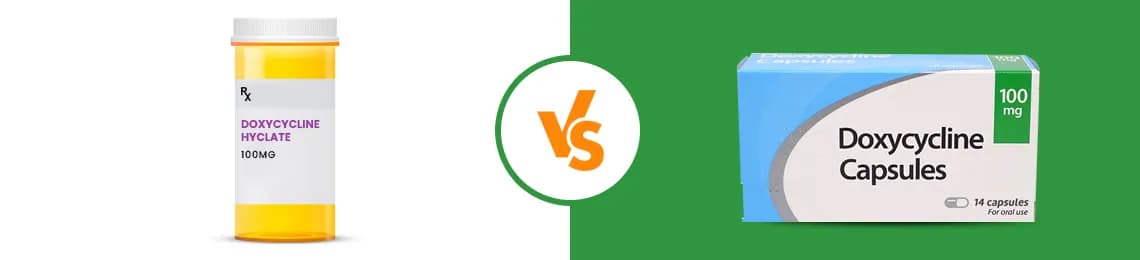
Definition
Chemical Form
Solubility
Absorption
Common Brand Names
FDA Approval
Usual Dosage Form
Used For
Side Effects
GI Tolerance
Cost
Availability
Storage
Prescription Requirement
Frequently Asked Questions
What is the difference between Doxycycline and Doxycycline Hyclate?
+
Doxycycline is a general antibiotic name, while Doxycycline Hyclate is a specific salt form. Both work the same way to treat infections, but Hyclate dissolves better in water and may cause more stomach irritation. The main differences are in formulation, price, and tolerability not effectiveness. Your doctor may choose one based on how your body reacts.
Is Doxycycline Hyclate more effective than Doxycycline?
+
No, Doxycycline Hyclate is not more effective it's just one version of Doxycycline. All salt forms, including Hyclate and Monohydrate, are equally effective at treating infections. The choice depends on your body's tolerance, side effects, and cost. For instance, Monohydrate may cause less nausea, but Hyclate is often cheaper and easier to find in pharmacies.
Why is Doxycycline Hyclate more commonly prescribed?
+
Doxycycline Hyclate is more widely prescribed because it\'s often cheaper and readily available in most pharmacies. It's well-absorbed and treats a wide range of bacterial infections. Although it may cause more stomach upset than other forms, it remains a go-to antibiotic for many doctors due to its proven track record, affordability, and consistent effectiveness.
Can I switch from Doxycycline Hyclate to another form?
+
Yes, you can switch between forms like Hyclate and Monohydrate with your doctor's guidance. Both treat the same conditions, but differences in absorption and side effects may affect your experience. If you\'re having stomach issues with Hyclate, your doctor might recommend Monohydrate instead. Never switch without consulting a healthcare provider to ensure proper dosing and safety.
Does Doxycycline Hyclate cause more side effects?
+
Doxycycline Hyclate may cause slightly more gastrointestinal side effects, such as nausea or stomach irritation, compared to the Monohydrate form. However, both forms share the same potential risks like photosensitivity, diarrhea, and dizziness. If you experience uncomfortable side effects, talk to your doctor. A different salt form may be better suited for your body without changing the effectiveness.