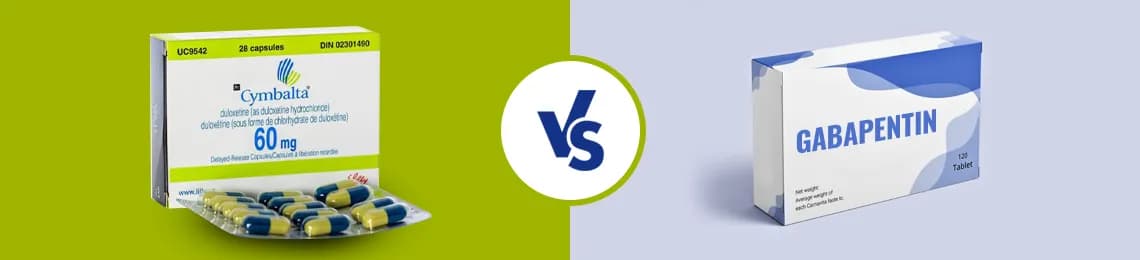
Cymbalta vs Gabapentin
Drug Class
Primary Uses
Mechanism of Action
FDA Approval
Prescription Required
Formulations
Dosing Frequency
Common Side Effects
Withdrawal Symptoms
Risk of Dependence
Onset of Action
Pregnancy Category (Old System)
Black Box Warning
Drug Interactions
Cost (USA, without insurance)
Taper Required Before Stopping
Controlled Substance?
Used Off-label For
Frequently Asked Questions
What is the main difference between Cymbalta and Gabapentin?
+
Cymbalta is an SNRI antidepressant that affects serotonin and norepinephrine levels. Gabapentin is an anticonvulsant that calms nerve activity. Both treat nerve pain, but work differently.
Which is better for nerve pain: Cymbalta or Gabapentin?
+
Both can be effective, but it depends on the individual. Cymbalta may work better for people with pain and depression or anxiety, while Gabapentin is often used for nerve pain alone.
Can you take Cymbalta and Gabapentin together?
+
Yes, doctors may prescribe them together for better pain relief, especially in chronic conditions. However, this must be done under medical supervision to avoid side effects.
What are the common side effects of Cymbalta vs Gabapentin?
+
Cymbalta may cause nausea, dry mouth, and insomnia. Gabapentin often causes drowsiness, dizziness, and weight gain. Side effects vary by person and dose.
Is Cymbalta or Gabapentin better for anxiety?
+
Cymbalta is FDA-approved for anxiety and often preferred. Gabapentin may help anxiety off-label, but it's not an official use and should be monitored by a doctor.