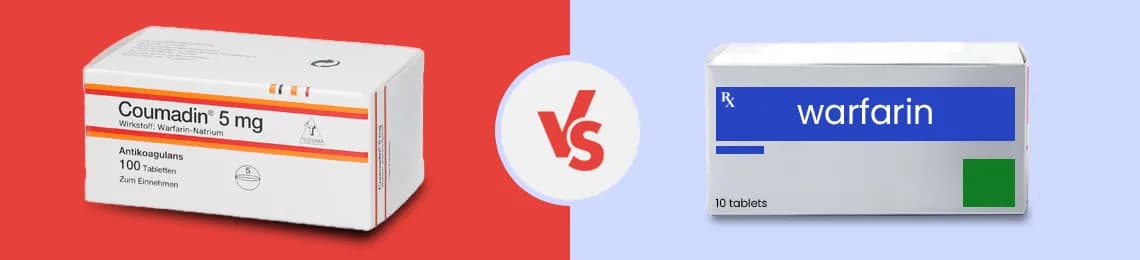
Coumadin vs Warfarin
Classification
Generic/Brand
Active Ingredient
Indications
Dosage Forms
Common Dosages
Side Effects
Major Interactions
Contraindications
Monitoring Requirements
Cost
Manufacturer
Frequently Asked Questions
Are Coumadin and warfarin the same medication?
+
Yes, Coumadin is a brand name for the drug warfarin. Both contain the same active ingredient and work in the same way to prevent blood clots. The only difference is the brand. Warfarin is also available in generic form, which may be more affordable and just as effective for most people.
Is there a difference in effectiveness between Coumadin and generic warfarin?
+
No, there is generally no difference in effectiveness. Both Coumadin and generic warfarin are FDA-approved and must meet the same standards. However, some people may notice slight variations in response due to inactive ingredients. Your doctor may choose one over the other based on how your body reacts and insurance coverage.
Can I switch from Coumadin to warfarin safely?
+
Yes, switching between Coumadin and generic warfarin is usually safe because they contain the same active drug. However, you should not switch without your doctor's supervision. Your healthcare provider will monitor your INR levels closely to ensure the dose remains effective and safe during the transition.
Which is more affordable, Coumadin or warfarin?
+
Generic warfarin is usually more affordable than Coumadin. Since Coumadin is a brand name, it tends to cost more. Most pharmacies offer generic warfarin at lower prices, especially if you\'re paying out of pocket. Always check with your pharmacist or insurance plan for the best pricing options.
Do Coumadin and warfarin have the same side effects?
+
Yes, both have the same side effects because they are the same drug. Common side effects include easy bruising, bleeding, and nausea. Serious risks include uncontrolled bleeding or interactions with food and other medications. Regular blood testing is necessary with both to ensure safe and effective treatment.