


Rheumatoid arthritis shows up when your immunity system starts attacking your own joints. Your joints have a lining called synovium; it is this lining which is vulnerable and is more likely attacked when you develop rheumatoid arthritis. This condition is widely known to affect your ankles, knees and hands. There are also instances wherein similar joints i.e., those present on either side of your body – such as knees or hands may get affected. What are the treatments for rheumatoid arthritis? It helps to have added insights into this.
What is rheumatoid arthritis?
Rheumatoid arthritis is labelled as a condition that develops in your joints, like knees and ankles. However - not stopping with joints, there are cases wherein this autoimmune condition has affected the cardiac system, eyes, lungs as well as the circulatory system.
Due to some unknown factors, females are more likely to get rheumatoid arthritis than males. This condition starts at as you turn middle-aged i.e., once you are 35 – 40 years old. Presence of a family member or a close blood relative enhances the odds of getting this disorder.
Is rheumatoid arthritis a disability, Rheumatoid arthritis (RA) can be a disability for some people. It causes joint pain, swelling, and stiffness. Some days, a person may feel fine. Other days, simple tasks like walking or writing may be hard. If RA limits your daily life or work, it may be seen as a disability. Doctors and disability programs help decide this.
In healthy people, immune cells fight against germs and foreign matter such as viruses and bacteria. In case of autoimmune disorders - such as rheumatoid arthritis – your immunity system starts mistaking your own body's healthy parts like say, cells, tissues and muscles as germs / threats. Once this error sets in, your immunity system starts producing chemicals to attack these healthy parts.
Signs of rheumatoid arthritis
In case of rheumatoid arthritis, your own immunity cells start working against linings present inside your joints. These linings are known as synovium, and these make fluids so that your joints are lubricated. Once synovium is inflamed, it starts to get swollen and its size gets enlarged. This is what makes your joints turn painful.
In most cases, for the same reasons i.e., inflammation of synovium, joints tend to become swollen and may also soften. All these activities make it difficult for you to move your joints freely. These are the distinctive symptoms of rheumatoid arthritis.
However, these symptoms change from one stage to another. At the first few stages, those who have this autoimmune disorder are unlikely to witness inflammation or reddening of joints. Instead, they may feel pains and see their joints going tender.
You are advised to take these symptoms more seriously if pains persist for more than four weeks’ time; if unattended, this can lead to stiffening or inflammation of joints. Also, if stiffening of joints continues for more than 45 minutes once you wake up in the morning, you need to see a doctor. Watch out for smaller-sized-joints such as wrists or other such minor joints in your feet or hands; these are more likely affected at the initial stages.
Treatments for rheumatoid arthritis
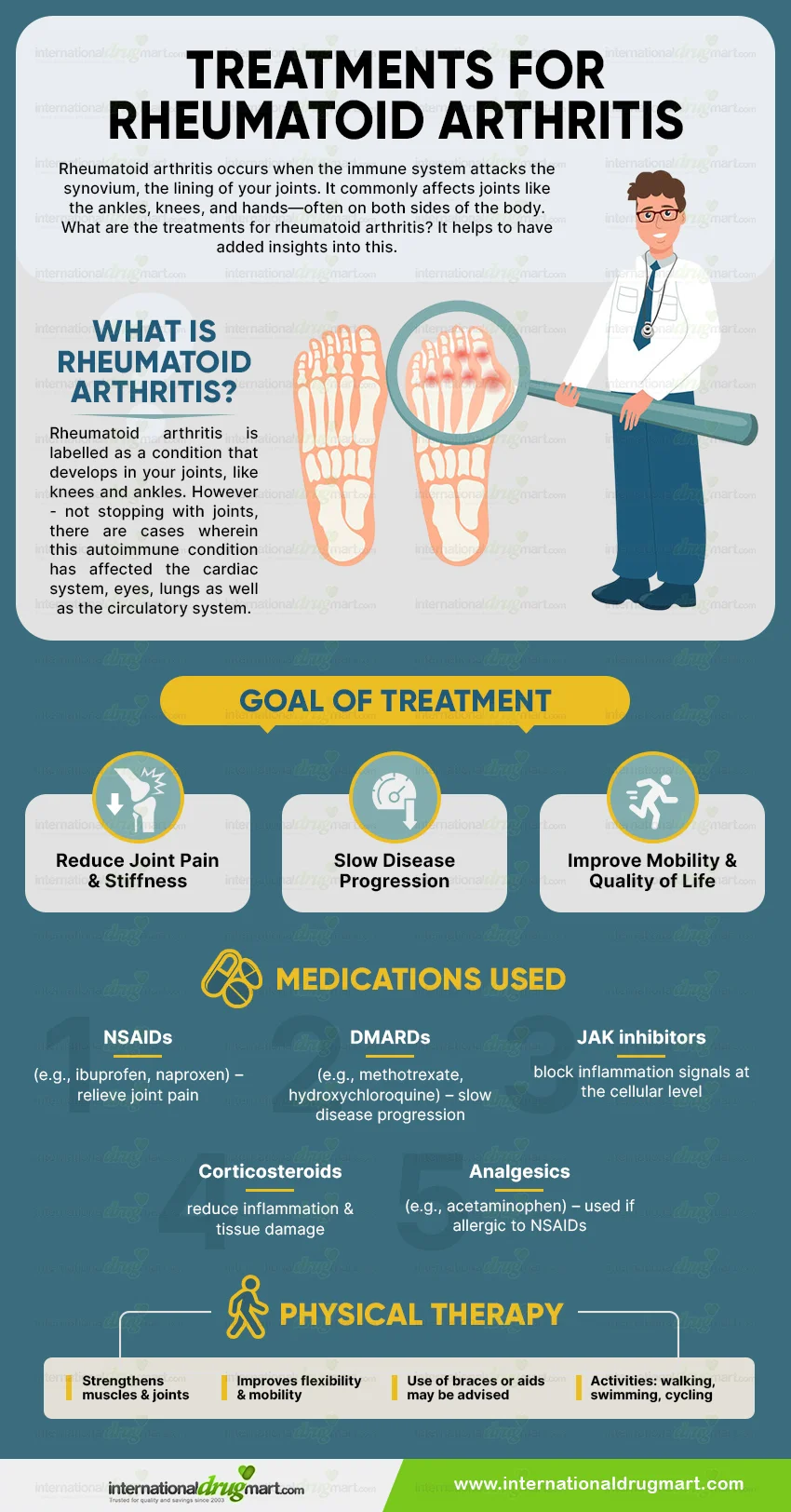
Treatments offered for rheumatoid arthritis aim at decreasing the stiffness of joints, and also allaying pains. These treatment plans also focus on stopping or slowing down the further progression of this autoimmune ailment. Medications are provided to prevent any further damages inflicted onto your joints, and thus improve your ability to perform bodily activities.
Treatments also concentrate on bringing about needful relief from weakness, tiredness and fatigue. It is a common practice to include medications as part of treatments offered – especially, those belonging to non-steroidal anti-inflammatory drugs (in short, NSAIDs). Such drugs are good at alleviating pain in joints.
Synthetic forms of DMARDs i.e., Disease Modifying Antirheumatic Drugs, especially methotrexate is one of the first-line meds for treating RA. These drugs are administered to slow down the further progress of this autoimmune disease. There are also a few other DMARDs used for RA - such as hydroxychloroquine, leflunomide, sulfasalazine – to name some.
If your joint condition is deteriorating too fast, more than one DMRD is prescribed for treating RA. Drugs such as Janus kinase inhibiting meds are used. Key ingredients of these drugs block Janus kinase enzyme which is known to signal your cells to cause internal swelling and also alter the responses of your immune system accordingly.
Your doctor may also prescribe analgesics as part of treatment plants; acetaminophen is one of the widely used drugs in this genre. This genre of drugs is administered when you have allergies to NSAIDs like ibuprofen, naproxen, etc. Your caregiving teams may include administration of corticosteroids to treat RA. These steroidal meds are taken through the oral route; these meds are known for their ability to reduce inflammation and thus prevent further damage to your tissues and muscles.
Role of physical activities and therapies to treat rheumatoid arthritis
Physical activities can strengthen tissues, muscles and also renew mobility within your joints. It is a wise thing to consider the physical therapist who can advise how to move your joints without causing added damages to them. Therapists can also help you with braces – if needed - in order as an added support to parts damaged due to arthritis.
Essentially therapist's plan is to enhance mobility of joints and help build strength in your muscles. These help to promote overall wellbeing and health. Most popular physical activities include swimming, water-based exercises, aerobics of the low impact mode, cycling with stationary gym equipment and above all, walking. If you are planning to start any new workouts / exercises, it becomes important to talk to your physical therapist or your caregiving team.
In general, you are advised to stay mindful of the signs, side effects and levels of pains you experience. Never forget to perform regular workouts stay updated with immunisations – if needed. Stopping to smoke can help treatments to expedite relief. You may also require emotional support; it is a good thing to spend time with friends and family. Such practices can help avoid sadness or depression.
It is important to limit movements of your hip joints; owing to this, you may need to consult with a caregiver about having sex. It helps to have an open discussion with your partner(s) to make them understand your physical disabilities. As a general precaution, stay away from taking lifting heavy weights or changing your postures too often. Care to eat healthy foods such as fruits, vegetables, fish and fats sourced from olive oil.
Disclaimer
Information provided here are only of supplementary nature. Information shared here does not substitute a qualified doctor’s advice. This website is not suggesting intake of this drug as safe or appropriate. Hence it is advised to talk to your doctor before consuming this med or any other drug.