


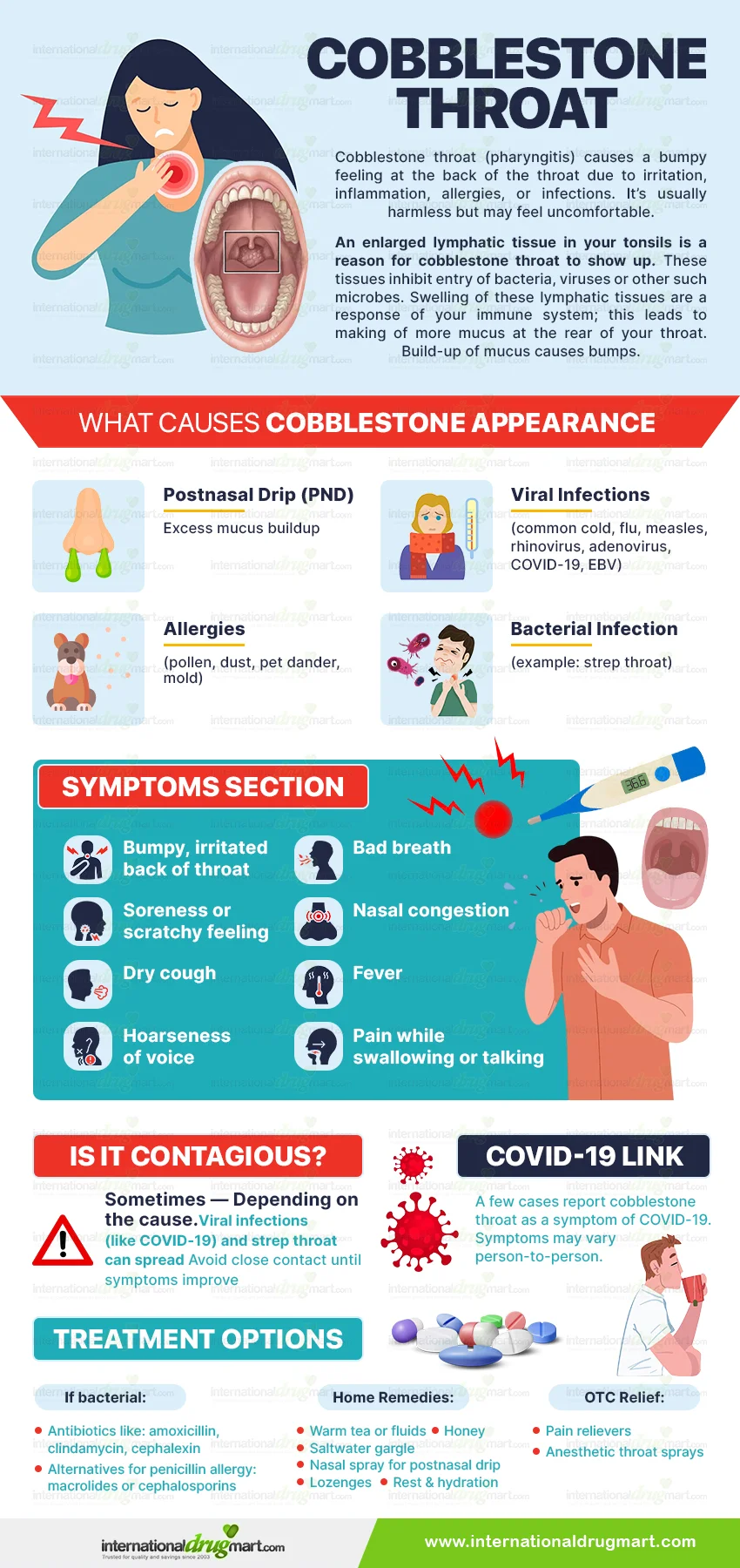
Pharyngitis is also called cobblestone throat. If you have cobblestone throat, you may feel bumpiness or an unevenness at your throat’s rear. As pharynx takes the shape of cobblestones, it is named thus. This may occur due to inflammation of throat and / or irritation. Those with postnasal drip, allergies, or infections tend to get it. However, cobblestone throat is usually not a serious condition.
An enlarged lymphatic tissue in your tonsils is a reason for cobblestone throat to show up. These tissues inhibit entry of bacteria, viruses or other such microbes. Swelling of these lymphatic tissues are a response of your immune system; this leads to making of more mucus at the rear of your throat. Build-up of mucus causes bumps. As these bumps appear similar to cobblestone-paved roads, this condition is labelled "cobblestone throat."
Cobblestone throat - symptoms
Cobblestone throat causes symptoms such as a discolored bump at your throat, soreness, inflammation, throat irritation, and a feeling like something being stuck inside.
You may also develop a tickly or scratchy throat, coupled with bad odor, spells of dry-coughing, fever, hoarseness of voice, congestion of nasal passages, and pains each time you try talking or swallowing foods.
Reasons for cobblestone throat
Postnasal Drip (PND) flags off an increased mucus production at your nasal pathways as well as throat. This remains a key reason for cobblestone throat to show up. Excessive production of mucus or thickening of your mucus are closely linked to this throat condition.
Pharyngitis is the inflammation of your pharynx. This is another reason for you to get cobblestone throat. This is most-often linked to viral infections. For example - onset of common cold or flu, measles, etc. are typical risk factors. Caveat: A few other viruses may also cause cobblestone throat; these include rhinovirus, adenovirus, coronavirus, chickenpox – to name some.Clinical studies underscore Epstein-Barr virus as another likely cause for cobblestone throat.
Beware of a few allergies – yes, they may also cause irritation and in turn, lead to cobblestone throat. This you get mostly when you breathe-in allergens such as pet dander, dust, mites, pollen grains, and mold. These foreign matter irritate your throat making more mucus to be made.
Is cobblestone throat a contagious condition?
Throat conditions like strep throat – a bacterial infection - and Covid - 19 – a viral infection, are communicable. An infected person can pass it on to you. Getting closer i.e., within 2 feet distance with infected persons bears the risk of your getting it. In some cases, cobblestone throat is evidenced as a contagious condition. Infected individuals are to avoid stepping out of home and public places until they are back to a normal. This way you can help avoid potential spread of your condition to others.
Is Covid-19 a cobblestone throat trigger?
A few reports reveal cobblestone throat may be one of the symptoms of Covid - 19. However, not all symptoms are the same. Symptoms can be different among individuals, depending on the type of infection. The symptoms you may develop rely on the genre of microbe and also on your existing health condition. It is possible for the same virus-variant to cause a different symptom in another person infected by it.
If you are down with Covid - 19, it is likely to make your throat reddened and swollen. You may cough a lot – ranging from moderate to severe spells - and may also lose your sense of smell i.e., olfactory function.
So as to enhance accuracy of diagnosis, your healthcare provider may test you for likely onset of strep throat, Covid - 19 and influenza (flu / common cold).
It takes a throat examination for your healthcare provider to arrive at a fairly accurate diagnosis. In case a physical examination is not able to fetch needful clarity, your doctor may order a throat culture or a strep test.
Laryngitis is a condition where your voice box gets swollen – quite unlike pharyngitis. This helps you to identify the differences between these two conditions. Hoarseness (dysphonia) of your voice is one of the primary symptoms laryngitis causes. In some acute cases, a complete loss of voice is experienced. This condition involves inflammation of a part of your throat coupled with soreness / hoarseness.
On the other hand, pharyngitis is swelling of the rear of throat. This shows up as a runny nose, migraines, coughing spells, inflammation of lymphatic nodes near your neck / ears, etc. However, treatment is quite similar for both these infectious conditions.
How caregiving teams manage cobblestone throat condition?
Underlying cause for your throat condition determines the type of remedial-treatment your condition needs. If tests reveal a bacterial attack, antibiotics / antibacterial meds are prescribed. Drugs include clindamycin, amoxicillin, cephalexin, etc. are widely administered. People living with penicillin allergies are not recommended to use amoxicillin; instead macrolide or cephalosporins are given. The good news is pharyngitis usually gets-back to normal in a week’s time.
There are a few home-based remedies to help relieve pains and discomfort caused by throat conditions. You are advised to drink needful amount of water to keep your body hydrated, take good rest, consume honey to reduce swelling, have warm beverages like tea, gargle saltwater, suck on a throat lozenge, use nasal sprays for postnasal drip, and so on.
You can also try out some over-the-counter (OTC) painkillers to manage pains, headache / migraines, and increase in body temperature. In addition, using anesthetic sprays can even help alleviate painful symptoms.
When to visit a caregiver for cobblestone throat?
If your throat condition persists for more than few weeks’ time or turning worse over time, rake an appointment with your healthcare provider. You are advised not to delay this any further if you have started developing troubles as you ingest and swallow foods. If your throat is swollen or if you are coughing-up blood, you need to rush to a local healthcare facility on an emergency basis.
In US, you can dial 911 for needful clinical assistance. In Canada, you may ring Health Canada or rush to a local clinic.