


Antiplatelet meds are used mainly to prevent blood clots – and thus minimise the odds of thrombotic disorders. These meds inhibit platelets from congregating and making a clot inside your bloodstream. These drugs are widely used for the treatment of heart diseases – chiefly, ischemic heart conditions. Clopidogrel is one of the popular antiplatelet drugs administered to decrease risks of strokes as well as heart diseases. Do you know of the list of foods to avoid with clopidogrel?
Cardiovascular disorders are conditions that involve either your blood vessels or the heart. There are many types of cardiovascular ailments namely, heart attack, hypertensive heart disorders, cardiomyopathy, arrhythmia, peripheral artery diseases, valvular diseases - to name a few.
Studies reveal diet-related risks contribute to more than 50% of fatal events due to CVD-based ailments. In general, those who smoke tobacco regularly, onset of autoimmune conditions like diabetes, leading a sedentary lifestyle, being overweight, having a high level of blood cholesterol coupled with poor eating habits, an increased intake of alcohol on a daily basis and presence of high levels of blood pressure are some of the other risk factors.
Added to this, people who sleep less or have disturbed sleeping patterns are also at greater risk. Of all these risk factors, more than 11% of cardiac events-related deaths are attributed to hypertension or high levels of blood pressure. Smoking tobacco fares a second risk-rank amounting for about 10% of all CVD-based fatal events. Being overweight and lack of exercise each contribute about 5 – 6% of fatal events.
In this light, what is clopidogrel?
Clopidogrel is one of the antiplatelet drugs used for preventing incidence of strokes as well as cardiac disorders. It is often taken along with aspirin during a cardiac arrest. It is also used after placing an arterial stent in a blood vessel. Clopidogrel is available as an oral formulation. Its effects may need about 100 minutes to start and remedial effects are known to persist for more than four days’ time after each dose.
Clopidogrel won its patent in early-1980s. It came to use for treating patients from mid-1990s. Today, it fares among one of the most essential drugs, as per the list of the World Health Organization (WHO). As per latest estimates, it is as one of the top-50 highly prescribed drugs in the US. The number of prescriptions written for clopidogrel each year has is ~ 15 million. The good news is you can get it as a generic drug; you can procure it at a relatively lower cost than its branded equivalents.
List of foods to avoid with clopidogrel
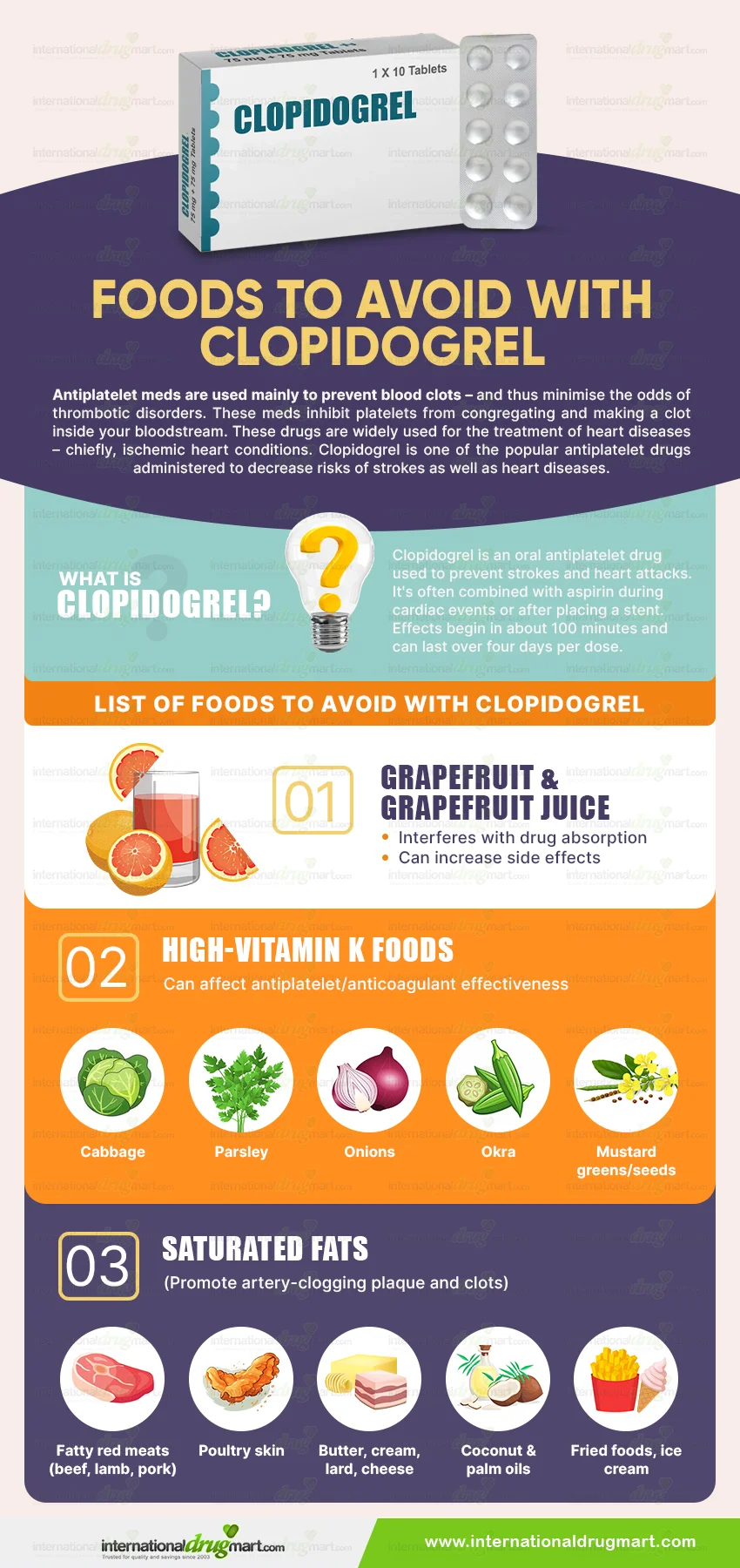
There are a few foods your dietitian may advise you not to take while using clopidogrel. Some of these foods that you need to stay away from include grapefruit (as well as its juice), foods that contain an abundant amount of vitamin K, foots known for high presence of saturated fats, etc.
Of these – grapefruit is known to interact with several drugs, including clopidogrel. Grapefruit or its juice can leave a larger residue of drugs; this occurs as the fruit interferes with absorption of several meds. Owing to this, dietitians may tell you to stay away from grapefruit and its juice.
Foods with a high amount of vitamin K in them do not go well with antiplatelet meds as well as anticoagulants like warfarin. Foods rich in vitamin K are cabbage, onions, parsley, okra, mustard seeds – to name some.
Foods that are high on saturated fats increase the odds of fats building up inside your arteries. These fatty deposits can turn into a plaque and lead to a good condition known as atherosclerosis. This shows up when platelets come together due to your excessive intake of saturated fats; if unattended, these can turn into clots inside your veins as well as arteries.
Saturated fats are commonly found in animal-based foods as well as a few dairy products. It can also be found in plants such as palm fruit, coconuts, etc. You need to stay away from lamb, beef, pork, poultry products with skin on them, cream and lard, cheese, butter, coconut – including its oil, palm fruit and oil extracted off it.
Keep away from eating a lot of ice cream and foods that are fried excessively. You can also talk to your dietitian to know what other foods do not go well with antiplatelet meds like clopidogrel.
List of foods you should eat while using Clopidogrel
Your dietitian may advise you to eat a lot of plant-based foods; these include vegetables as well as fruits. It is a good practice to eat bananas, apples, berries, sprouts, broccoli, dark and green leafy vegetables. You can also take a lot of orange-colored vegetables such as pumpkin, sweet potatoes and carrots.
Omega-3 fats help avoid plaque formation inside your arteries. These fats prevent platelets from joining together and turning into clots in your bloodstream. Omega-3 rich foods include walnuts, chia seeds, flax seats, oil of cod liver, fish such as sardines, salmon, etc.
You can also regularly take a diet rich in lentils, Peas and beans - especially dried ones. These also are a great source of fibers, plant-derived vitamins as well as nutrients. Another advantage of eating lentils is you can gain access to copious amount of potassium from them. You need to know this mineral helps reduce your blood pressure levels. Research done on legume intake suggests a marked improvement in circulatory wellbeing.
Side Effects Of Clopidogrel The Antiplatelet Agent For Cardiovascular Diseases, Clopidogrel, an antiplatelet medicine for heart and blood vessel conditions, may cause side effects in some people. Common side effects include easy bruising, nosebleeds, or bleeding gums. Some people may have stomach upset, diarrhea, or headache. Serious but rare side effects can include severe bleeding, blood in urine or stools, and allergic reactions like rash or swelling. Always take clopidogrel exactly as your doctor prescribes and report any unusual bleeding or symptoms for safe and effective treatment.
In general, it helps to discontinue smoking habit. You may also start working out on a daily basis; you can start with moderate spells of workout or walk for about 25 minutes - to start with. You may also have to reduce the number of alcoholic drinks you take on daily basis. People who drink regularly may have to cut their drink to one glass per day.
Lastly, if you are taking clopidogrel - tell your treating doctor if you are taking meds like aspirin, non-steroidal anti-inflammatory drugs like ibuprofen or anticoagulants like coumadin or warfarin.
Disclaimer
Information provided here are only of supplementary nature. Information shared here does not substitute a qualified doctor’s advice. This website is not suggesting intake of this drug as safe or appropriate. Hence it is advised to talk to your doctor before consuming this med or any other drug.