Enclomiphene vs Clomiphene
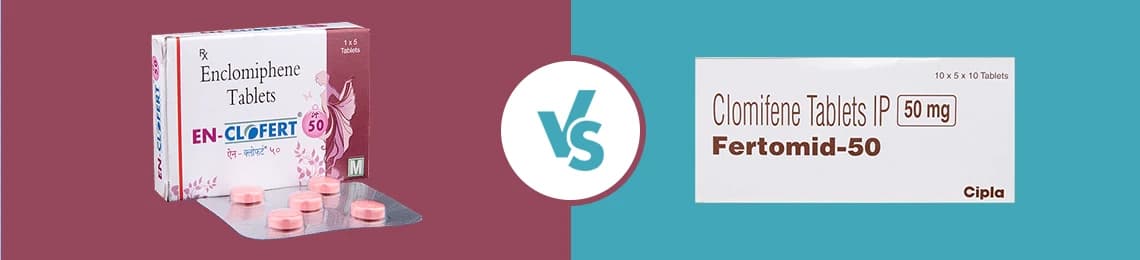
Drug Class
Composition
Primary Medical Use
Mechanism of Action
Effect on Testosterone
Effect on Sperm Count
Half-Life
Onset of Action
Side Effects
Best For
Frequently Asked Questions
Which is better for increasing testosterone, Enclomiphene or Clomiphene?
+
Enclomiphene is generally better for boosting testosterone because it contains only the active isomer responsible for hormone stimulation. It raises LH and FSH more consistently and maintains sperm production. Clomiphene can increase testosterone too, but its mixed isomers may cause inconsistent results and more side effects in long-term use.
Why do men prefer Enclomiphene over Clomiphene?
+
Men often prefer Enclomiphene because it improves natural testosterone while supporting sperm count and reducing estrogen-related side effects. Clomiphene contains zuclomiphene, which can stay in the body longer and may cause mood changes or vision issues. Enclomiphene’s cleaner profile makes it suitable for fertility-focused or long-term hormonal support.
Is Clomiphene still useful for male fertility?
+
Yes, Clomiphene is still used for male fertility, especially when cost is a concern. It can boost testosterone and support sperm production, but some men experience unwanted estrogenic effects due to its mixed isomers. Healthcare guidance is important to monitor hormone levels and adjust dosage for the best response.
Can women use Enclomiphene like they use Clomiphene?
+
No. Clomiphene is the standard medication for inducing ovulation in women who struggle to conceive. Enclomiphene is rarely used in women because its clinical focus is on male hormonal balance. While both belong to the same drug class, treatment goals differ, so women should use Clomiphene under medical supervision.