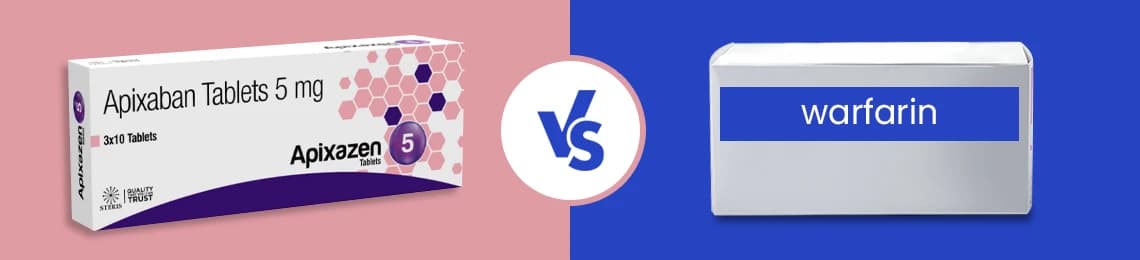
Apixaban vs Warfarin
Drug Class
Brand Name
Mechanism of Action
Indications
Onset of Action
Monitoring Required
Dietary Restrictions
Drug Interactions
Half-life
Antidote/Reversal Agent
Dosing
Use in Renal Impairment
Pregnancy Use
Bleeding Risk
Cost
Need for Bridging
Reversal Time
Preferred In
Frequently Asked Questions
What is the safest blood thinner to take?
+
Apixaban is often considered one of the safest blood thinners due to its lower risk of major bleeding, especially brain bleeds. Unlike warfarin, it doesn't require regular blood tests or strict dietary changes. However, the safest option depends on your health condition, kidney function, and other medications. Always consult your doctor before starting any anticoagulant.
Why choose apixaban over warfarin?
+
People often choose apixaban over warfarin because it works fast, doesn't require regular INR blood testing, and has fewer interactions with food and drugs. It's also linked to a lower risk of serious bleeding. For many, apixaban offers more convenience and safety, making it a preferred choice for preventing strokes and treating blood clots.
What foods should you avoid while taking apixaban?
+
Unlike warfarin, apixaban does not interact with vitamin K, so there are no specific food restrictions. However, it's still smart to eat a balanced diet and limit alcohol. Avoiding supplements or herbal products like St. John's Wort without your doctor's advice is also important, as they can affect how apixaban works.
Why is warfarin being discontinued?
+
Warfarin isn't officially discontinued but is being used less because newer blood thinners like apixaban are safer and easier to manage. Warfarin needs frequent blood tests and has many food and drug interactions. Still, some patients need warfarin, especially those with mechanical heart valves or certain clotting disorders.
Is warfarin no longer recommended?
+
Warfarin is still recommended in specific cases, like for people with mechanical heart valves or certain clotting conditions. However, for many common conditions like atrial fibrillation or deep vein thrombosis, doctors now prefer newer drugs like apixaban due to fewer side effects and easier use. Warfarin remains a valuable option for select patients.