


Pain relievers are used for treating various types of pain. These drugs can manage pains ranging from migraines to arthritic pain. Most pain relievers may also have anti-inflammatory capabilities; these abilities make them decrease swelling – again, caused by bodily pain. These meds work on your brain and alter how your system experiences discomforts. You can buy a few of them as over the counter drugs; rest is strictly available as prescription drugs. But what pain reliever can you take while pregnant? It is of help to have more details.
Medications which can kill pains are known as analgesics. These are not like anesthetic drugs which are known to shut off your nerves. Doctors prescribe pain relievers to handle pains experienced post-surgery, injuries – such a fracture of bone(s), migraines – mild or severe spells of such pains, aches experienced due to menstrual cramping, discomforts caused by chronic conditions like cancers, back ache, arthritis, etc.
Pain relievers essentially work by altering the way your cerebral system responds to pains. Most meds of this genre are well-tolerated. However, an excessive dosage can cause difficulties to pass stools, impair vital organs like kidneys, liver, etc. In some cases, abdominal problems like ulcers, partial loss of sense of hearing, delayed clotting of blood – and owing to which internally bleeding can ensue.
Overuse of painkilling meds can make them less efficient. This is chiefly because of build-up of tolerance in your system. A few meds may also make your dependent / addicted to them. It is a safe thing to consult with a certified caregiver or a pharmacist prior to taking pain relieving meds.
What pain reliever can I take while pregnant?
Pregnancy cannot make you insulated from pain as well as bodily ache(s). Women may in fact experience new pains due to changes in hormones. It is unsafe to take pain relievers during pregnancy. Your doctor will prescribe meds that do not have any impact on fetus’ health and your wellbeing.
Select set of pain-relieving meds are considered safe for pregnant women. These are acetaminophen and some meds belonging to a gerne called non-steroidal anti-inflammatory drugs (NSAIDs). Of these, acetaminophen is unlikely to cause fetal defects or miscarriages. However, mothers-to-be who take acetaminophen for many weeks – 4 weeks or more – may put their infants to some risks.
Such infants – born to moms who consumed acetaminophen - are likely to get developmental conditions such as attention deficit hyperactivity disorder (in short, ADHD). Also, mothers-to-be who had acetaminophen everyday may give birth to babies with breathing problems. Difficulties such as gasping for breath, panting or wheezing may arise in babies born to such mothers.
Meds belonging to a popular genre called NSAIDs are widely consumed for fighting pains. Studies done on intake of NSAIDs by pregnant women indicate odds of cardiac problems as well as gastric conditions in new-born infants. Between NSAIDs and acetaminophen, caregiving professionals always rate the latter over others.
Intake of NSAIDs are a strict no-go among pregnant women during the last stage of their pregnancy – especially, the last 2 – 4 months. Women who are pregnant – when they take ibuprofen or naproxen in the last trimester – may give birth to infants to hypertension in the respiratory system of such new-borns. This is mainly due to the untimely closure of an artery supplying blood to your infant’s cardiac system.
There are also opioid-based pain relievers; this genre includes meds such as morphine, codeine, oxycodone, etc. These are relatively stronger than other forms of pain killing drugs. Mothers who flout their doctors’ advice and take opioids for managing pains can make their babies addicted to such drugs. Such babies may witness symptoms of withdrawal soon after their birth.
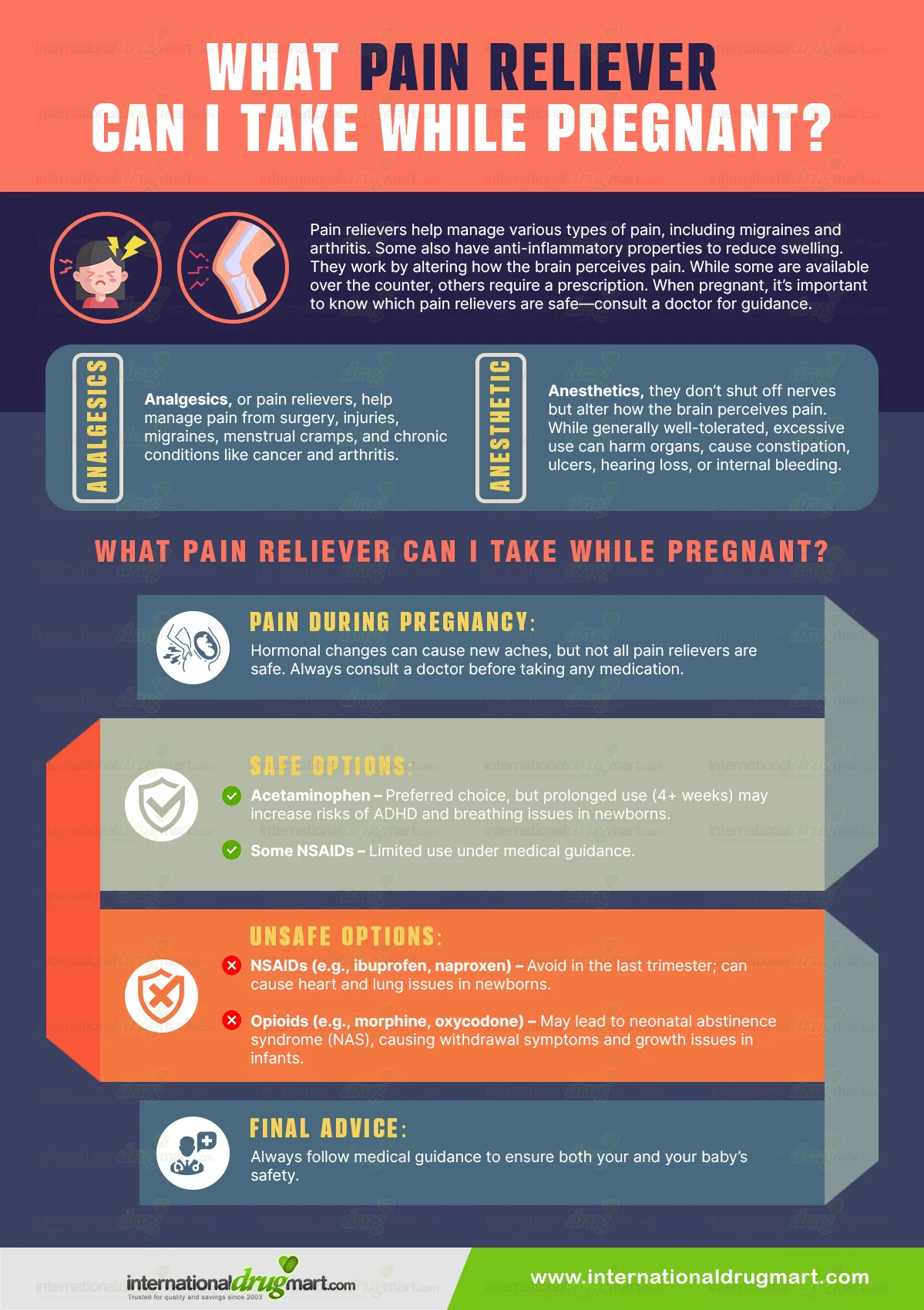
These signs of withdrawal are labelled as neonatal abstinence syndrome (in short, NAS). This can also make your baby to become very small in size; in some babies, breathing problems may occur.
Being pregnant is a beautiful experience, but it’s not always comfortable. As the body adjusts, many women deal with new kinds of pain. It might be a throbbing back, sore hips, or a headache that won’t go away. When pain shows up, the big question is: What’s safe to take?
Not all medicines are safe during pregnancy. A lot of them could affect the baby, especially if taken at the wrong time. That’s why doctors are careful about what they suggest. Some pain relievers are fine for short-term use, but others could cause harm if used too often.
One common option is acetaminophen. It’s often recommended for things like headaches, mild joint pain, or a low fever. When used for a few days and in the right dose, it’s one of the most trusted pain meds for pregnant women. That said, recent studies suggest using it too frequently may come with risks. There have been concerns about possible behavior or breathing issues in babies whose mothers used acetaminophen daily for several weeks. So, even something that seems gentle should be taken carefully.
There are also medications called NSAIDs, like ibuprofen or naproxen. These are great for reducing swelling or more intense pain, but they’re not usually considered pain meds safe for pregnancy, especially later on. Taking NSAIDs in the third trimester has been linked to issues with a baby’s heart and kidneys. They can also make labor more complicated. Some doctors may allow a short course early in pregnancy if there’s no better option, but this should always be closely watched.
Opioid medications, like oxycodone or morphine, are even more serious. They are strong painkillers, often used after surgery or for severe injury. But during pregnancy, these drugs can pass to the baby. If taken for too long, they can lead to problems after birth. Some babies experience withdrawal symptoms, trembling, feeding issues, trouble breathing, or being unusually fussy. This is why opioids are only used when no other pain med during pregnancy will work, and only for the shortest time possible.
Instead of jumping straight to pills, some women find relief in other ways. A warm bath, stretching, prenatal yoga, or using a warm compress can make a real difference. Massage from a trained therapist who understands pregnancy is another safe option. Sometimes just changing your sleep position or adding extra pillows under your belly and between your knees can ease the pressure.
Of course, even with natural remedies, it’s always smart to check with your healthcare provider. Some herbal products or essential oils are not safe for pregnancy, even if they seem harmless.
Pain during pregnancy can be frustrating. But trying to tough it out isn’t the best answer either. If you’re in pain, reach out to your doctor or midwife. They’ll help you figure out the best way to manage it without putting your baby at risk. The right pain meds for pregnant women are the ones that take care of both of you.
Disclaimer
Information provided here are only of supplementary nature. Information shared here does not substitute a qualified doctor’s advice. This website is not suggesting intake of this drug as safe or appropriate. Hence it is advised to talk to your doctor before consuming this med or any other drug.