


Antihistamines are drugs used to block effects of histamine; this is a chemical your immune system releases when exposed to allergens. Histamines aid by causing allergic reactions such as nasal congestion, itchiness, runny nose, sneezing, etc. Antihistamines are drugs that suppress these naturally-forming anti-allergen enzymes. But what is the best antihistamine for clogged ears?
Antihistamines are commonly used for treating allergic conditions such as hay fever, allergic conjunctivitis, hives (also known as urticaria) angioedema, etc. These meds are also helpful in the treatment of atopic dermatitis as well as sinusitis, in alleviating spells of itchiness and inflammation. These meds can also aid in resolving respiratory conditions like bronchitis, bronchial asthma, wheezing, etc., and to treat motion sickness (by reducing nausea and dizziness).
Types of Antihistamines
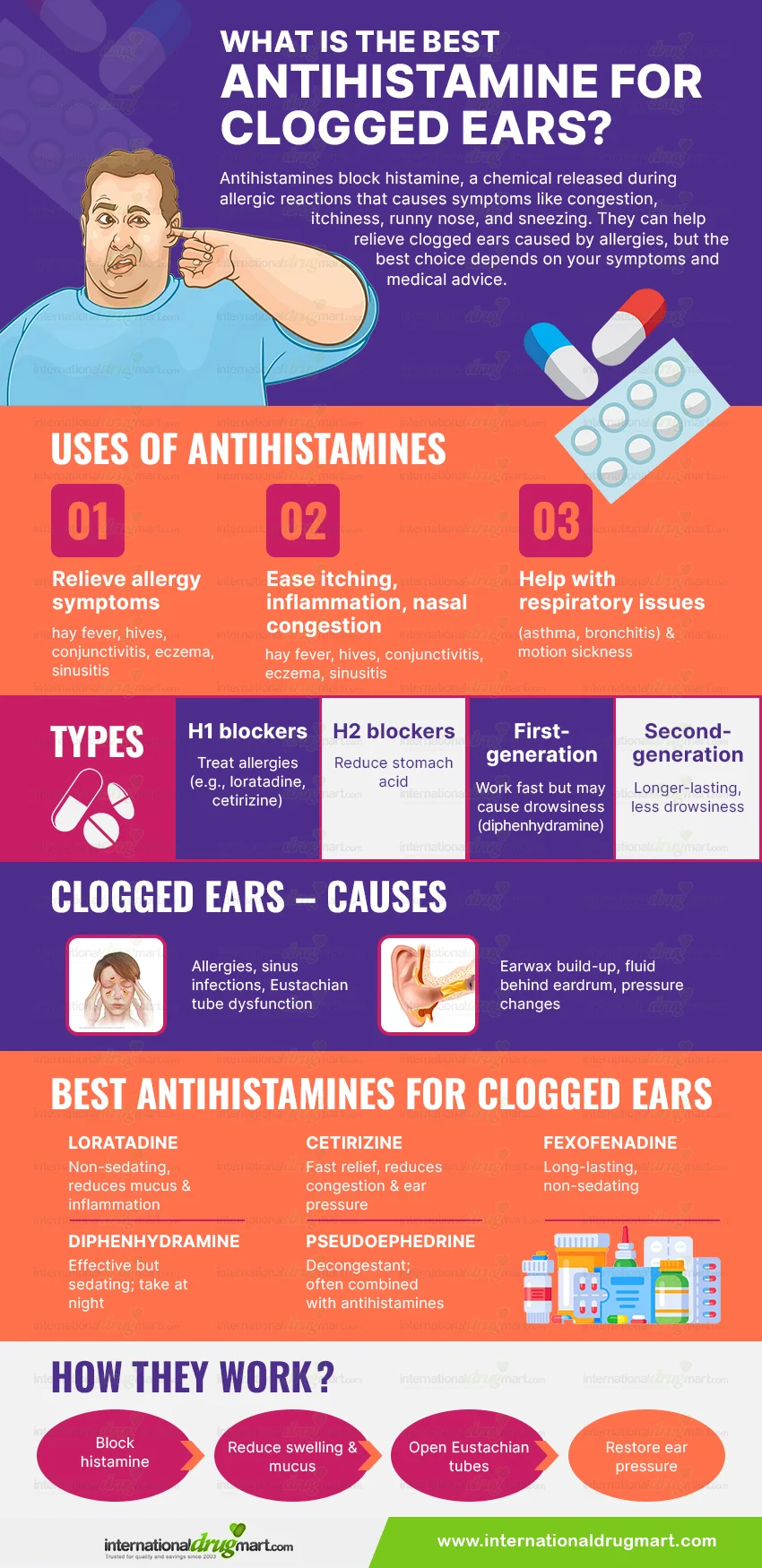
There are two chief kinds of antihistamines namely, H1 receptor blockers – these treat allergies, and H2 receptor blockers – these reduce stomach acid production.
First-generation antihistamines – These antihistamines - including diphenhydramine - cross the brain barrier and work on histamine receptors there.
Second-generation antihistamines – These are newer options; for example - loratadine and cetirizine. These are less likely to cause drowsiness and also known to offer long-lasting relief.
Clogging of ears your ears are connected to throat and nose through small tubes called Eustachian tubes. These tubes assist regulating air pressures and allow fluid to drain off middle ear. Clogged ears can dull your sense of hearing and may also lead to lightheadedness.
Clogging of ears may occur when an inflammation or mucus build-up - due to allergies, infections or common cold – blocks these connecting tubes. As a result, your ears may feel congested. If clogged ears persist for more than 3 days’ time or is accompanied by severe pain, fever, or hearing loss, it is important to consult with your physician. He / she may recommend a treatment plan consisting of nasal corticosteroids or a few ear-draining procedures.
Common causes of clogged ears are seasonal allergies, sinus infections, Eustachian-tube dysfunction, and fluid build-up behind your eardrum, excessive accumulation of earwax, ringing inside ears (tinnitus) or sudden changes in air-pressure – this can occur while flying or scuba diving. One of the effective ways to get relief from clogged ears is through use of antihistamines; these meds can help reduce inflammation and mucus build-up deep within.
What is the best antihistamine for clogged ears?
Clogged ears can be relieved with the use of a wide range of antihistamines. The below-given are some of the effective options -
- Loratadine – this is a non-sedating antihistamine to reduce allergy symptoms without making you sleepy. It reduces mucus production and inflammation in Eustachian tubes
- Cetirizine – this drug provides fast-relief from allergic reactions. This is known for reducing nasal congestion and ear pressure differentials
- Fexofenadine – this is one of the long-lasting, non-sedating antihistamines. It relieves nasal congestion and internal swelling. It is recommended to those who need extended relief from allergic reactions
- Diphenhydramine – this med works well for clogged ears, especially those caused by allergies or common cold. Beware of drowsiness and dizziness this is known to trigger. It is best taken at night hours
- Pseudoephedrine – this is a powerful decongestant; it manages swollen nasal tissues by opening-up Eustachian tubes. This is used along with antihistamines for better cure
How antihistamines help with clogged ears?
When your body is exposed to allergens, it soon releases histamine. As a result, allergy symptoms ensure – these include spells of sneezing, runny nose, watery discharge from your eyes and nasal congestion. Inflammation and fluid production – triggered by histamines – can obstruct Eustachian tubes and cause ear congestion.
Antihistamines work by preventing histamines’ actions; this is done by lowering swelling and mucus production. These meds help in opening blocked Eustachian tubes and thus restoring normal ear pressure. However, antihistamines cannot help ear problems caused by inner-ear infections or build-up of earwax.
What is the dosage of antihistamines for specific disease condition?
Dosage plans vary based upon type of antihistamine used, and also on condition needing treatment. Your age, body weight, and intensity of ailment influence the dosage strength of meds.
For example – antihistamine Cetirizine is administered at strengths of 5 - 10 mg; offered as a single dose per day to both adults as well as children aged above 6 years. In case of elderly people and those living with renal problems, a lower dosage strength is offered. Another med called desloratadine is offered to adults and children (but those aged more than 12 years); this is dosed at 5 mg as a single dose for every 24 hours.
On the other hand, drugs like fexofenadine are dosed at 60 mg – this is taken two times each day. It is prescribed for seasonal allergies like allergic rhinitis; if you have kidney related problems, dosages are moderated accordingly. The dosage strength of another med called diphenhydramine - used for allergic reactions and also as a sleep-inducing aid - ranges from 25 - 50 mg, offered every 4 - 6 hours.
In case of clogged ears –chiefly those caused by allergies – you need to take the right form of antihistamines. Your doctor will instruct you the drug suiting the allergy you are living with. Your daily schedule of doses is dependent on the discomforts you face and how worse the symptoms are.
In some cases, a combination of antihistamines as well as a few supportive remedies such as inhalation of steam, needful hydration and avoiding further exposure to allergens can bring about better relief. However, severe spells of allergic symptoms need an evaluation by a qualified medical practitioner; mainly to rule-out infections or other related complications.
In this light, cetirizine, loratadine, and fexofenadine remain stronger options and are best known for their milder side effects. Natural alternatives to antihistamines, natural remedies help relieve allergic symptoms; for example, C vitamin serves as a natural form of antihistamine. Intake of it aids in decreasing internal conditions like swelling. Probiotics are present in abundance in natural foods like yogurt, sauerkraut, and kombucha. These are good for gut health and can reduce allergies in the gastric tract. Butterbur is a widely-used herb known to cure several seasonal allergies. Fruits like pineapples have a substance called bromelain; this is essentially an enzyme known to decrease swelling in nasal airways.
Disclaimer
Information provided here are only of supplementary nature. Information shared here does not substitute a qualified doctor’s advice. This website is not suggesting intake of this drug as safe or appropriate. Hence it is advised to talk to your doctor before consuming this med or any other drug.