


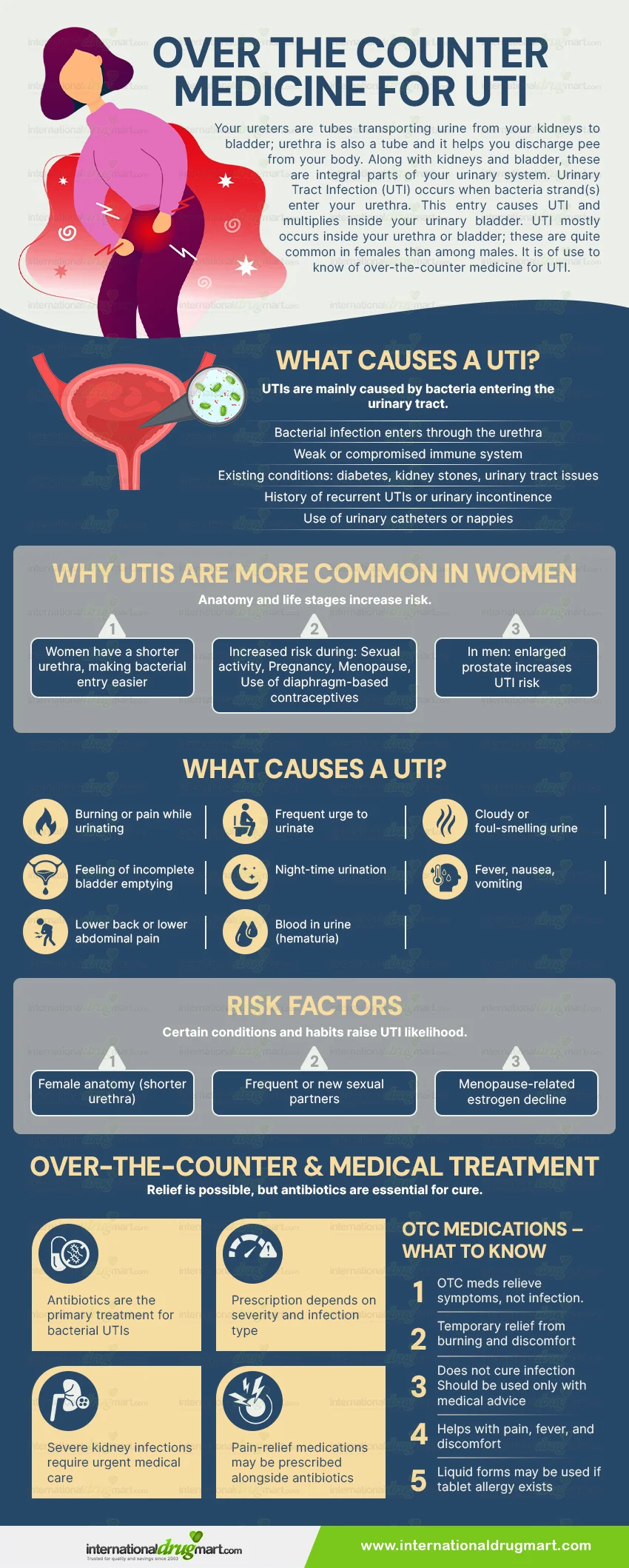
Your ureters are tubes transporting urine from your kidneys to bladder; urethra is also a tube and it helps you discharge pee from your body. Along with kidneys and bladder, these are integral parts of your urinary system. Urinary Tract Infection (UTI) occurs when bacteria strand(s) enter your urethra. This entry causes UTI and multiplies inside your urinary bladder. UTI mostly occurs inside your urethra or bladder; these are quite common in females than among males. It is of use to know of over-the-counter medicine for UTI.
What causes a UTI?
Bacterial infections are largely behind onset of UTI. It is through your urethra bacterial strands gain access into your body. A weak / compromised immune system may also lead to UTI. If you are diabetic, have kidney stones or other problems in your urinary system, odds are high of a UTI. Prior incidence of UTIs or urinary incontinence may also lead to UTI. UTI may show up if you use urinary catheter(s), nappies, etc.
Women have a shorter urethra – as compared to males. This enhances risks of getting UTI. Other risk factors for UTIs in females are being sexually active, pregnancy, menopause, or use of diaphragm-based contraceptives. In males, enlarged prostate increases odds of UTI.
Symptoms of UTI
UTI may show up through a few characteristic symptoms. While peeing you may experience pains, a burning / stinging sensation and your pee may turn smelly or cloudy. You will tend to pee more often than usual.
Your bladder may turn full making you pee by waking up at night. You may also experience other discomforts like vomiting, fever, nausea, pain in your lower back, pain in lower abdomen, traces of blood in urine (hematuria), etc.
Risk factors of urinary tract infection
Female anatomy bears risks of UTI. Women have shorter urethra. This allows bacterial infection to enter your bladder more easily as it of a shorter distance. Continuous sexual activity may also cause UTI. Having a new sexual partner increases risks. Menopause triggers a decline in estrogen raising the odds of getting UTI.
Diagnosis for UTI
Your urologist may diagnose UTI through one or more of these techniques:
- Urinalysis – your urologist will collect samples of your urine and sends it to the laboratory for needful tests; technicians use parameters like leukocyte esterase, count of white blood cells, and nitrites to check for UTI. Some tests also help rule-out other urinary condition(s)
- Urine culture –urologists order this test to check (as well as rule-out) bacterial infections in collected sample of urine
- Ultrasound – this is an imaging test. This enables your urologist assess how organs of your urinary system are working
- Computer Tomography (CT) scan – is another type of imaging test, more precise than an x-ray. CT scan captures cross section images of your body.
- Cystoscopy – is done with the help of an instrument called cystoscope; your urologist gets a clearer view of the ‘inside’ of your bladder. Views of the inside are through your urethra.
If you are down with frequent UTI more frequently, your urologist may order added panels of tests. Such advanced tests help diagnose incidence of other health issues such as diabetes mellitus. There are also tests done to detect dysfunction of your urinary system – a likely reason for getting infected there.
Over-the-Counter medicine for UTI
Antibiotics are a popular option to treat UTI. Antibiotics can combat bacterial strands triggering UTI. These meds kill such harmful microbes and arrest likely spread of infections. The type of antibiotic prescribed, duration of dosage plans, strength of dosages, etc., depend on your urinary condition.
If you are down with a severe renal infection, it is a wise thing to rush to a medical center in the vicinity.
Your urologist may - at times - prescribe a few pain-relief medications to treat pains and allied discomforts UTI possibly trigger.
Use of over-the-counter (OTC) medications for UTI may give you needful relief – but do not offer a permanent cure.
Phenazopyridine (Azo and Pyridium) – an OTC med - can possibly offer temporary relief from pains UTI causes. This med chiefly aims at reducing discomforts you face while peeing. But, as typical of any OTC med, the cure is only for a very short term. It is hence a good practice to take phenazopyridine along with other antibiotic meds (if bacteria is the underlying cause). Moreover, this med is never taken without the consent of your urologist.
Acetaminophen and ibuprofen (Tylenol and Advil) can be availed through OTC route; these are largely pain-relieving meds. These OTC drugs can help treat back pain, stomach pain, and discomforts UTIs show-up with. In case of being allergic to pill / tablet forms of phenazopyridine, you may try using their liquid suspension / syrup form.
Home remedies for UTI
Cranberry-based products are available as pills, tablets, dried fruits, and also as a juice. Cranberry is endowed with capabilities to relieve signs of UTI. Cranberry juice helps stay hydrated all through the day. Its juice also helps pee regularly, frequently and also aids releasing impurities off your body.
D-mannose powder – you can mix this powder form with fluids and drink. Most people believe it prevents the onset of a few types of UTIs.
Probiotics are another option for managing discomforts linked to UTI. Friendly bacteria are also loaded with health benefits – especially, for digestive wellbeing. Research is underway to assess capabilities of probiotics to speed-up your recovery from UTI, especially when taken along with antibiotics.
Above all, you need to stay cautious when you are down with UTI often. This does not augur well for your urinary system. If you ignore its symptoms, it may lead to a renal dysfunction – causing permanent kidney damage. In addition, women with UTI – if they are pregnant – may deliver in an untimely manner or may give birth to babies with lesser weight.
Men living with repeated infections tend to have a narrow urethra. This may lead to potentially life-threatening complications. Beware of larger risks when UTI travels up your urinary tract and reach your kidneys! It is highly recommended to talk to your urologist upon sensing the first signs of UTI.