


Magnesium plays a vital role in your body, but it rarely gets the credit it deserves for its excellent work. Calcium often ‘solely’ hogs the limelight for your bone health; iron takes a lion’s share of credit for boosting your energy levels. However, Magnesium silently does its job in the background. Not many know of how Magnesium helps several body functions, including your moods, behaviors, good working of the heart muscles, and overall muscle performance. It helps to understand Magnesium benefits for women.
Magnesium is a mineral smoothening over hundreds of enzymatic and metabolic functions. It has a say in controlling your muscular performances and health of nervous system. It also helps keep blood glucose and pressure levels within normal limits. Its role in making of proteins in your body is another essential aspect. It works as a ‘behind-the-veil’ coordinator of many physiological activities.
Role of Magnesium in women’s health
Physiology of women has unique set of needs - influenced by hormones, for reproduction and aging. Magnesium provides a response to these needs. For example, Magnesium is involved with muscle contractions and can provide relief with premenstrual symptoms such as cramps and changes in mood.
This mineral facilities calcium-metabolism to build bone density. It is of great use to women prone to osteoporosis - particularly after your menopause.
Magnesium ensures normal beating rate of your heart. It further helps create euphoric feelings by regulating neurotransmitters. This helps boost your thoughts and moods. Women have greater chances of turning anxious and depressed; a healthy supply of Magnesium helps maintain emotional balance.
How often can women take Magnesium?
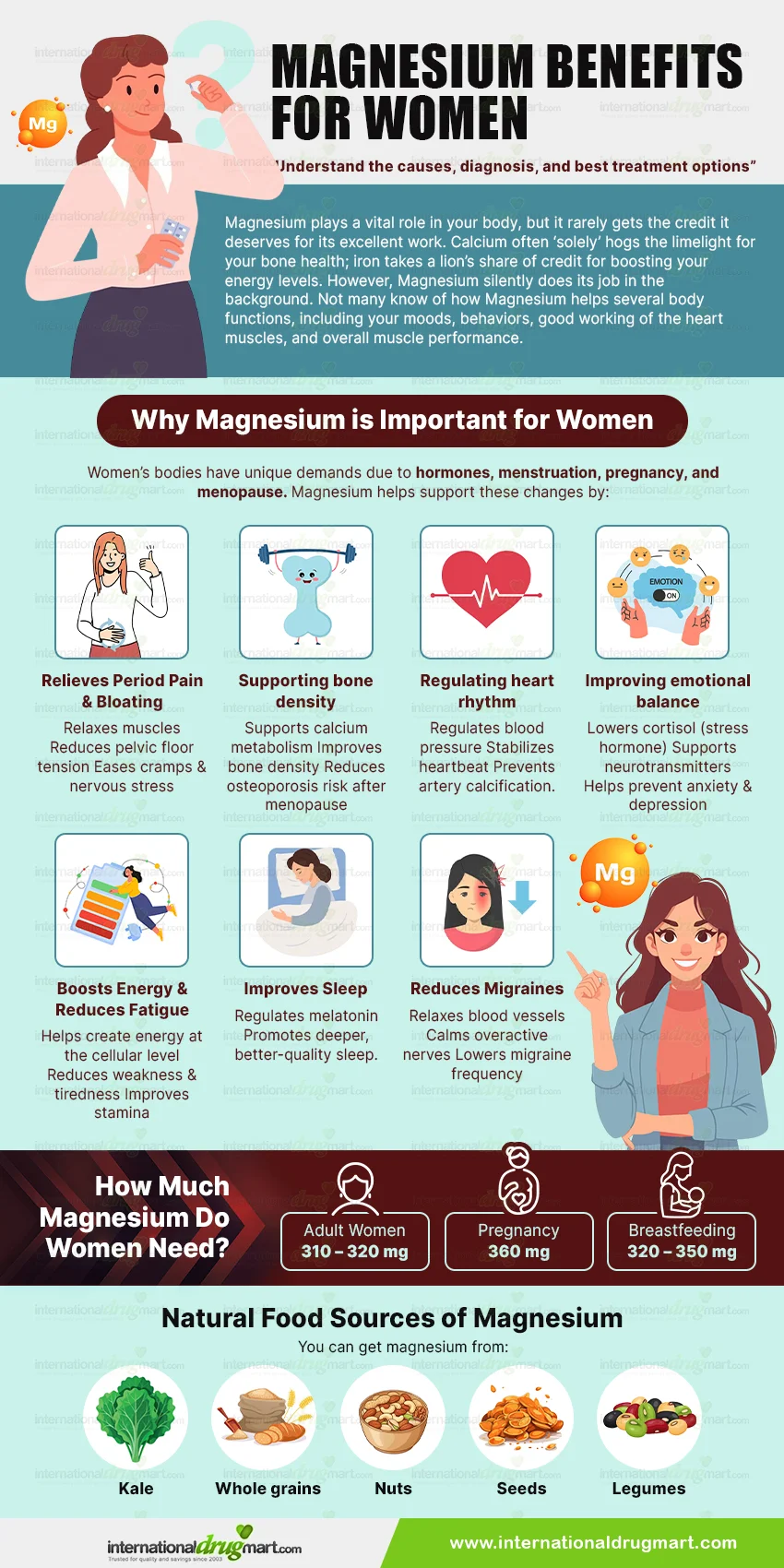
Recommended dietary allowance (RDA) of Magnesium depends on your age. Average intake for women fluctuates in the range of 310 to 320 milligrams per day. Your need is more while you are pregnant and also while nursing your infant. During pregnancy, RDA fares at 360 mg each day. Lactating mothers may need 320 to 350 mg; this varies with age. However, caution is needed to avoid taking excessive Magnesium. Maximum dosage per day has a ceiling of 350 mg – as per US-based food and drug administration (FDA). You can get enough Magnesium from foods such as kale, nuts, seeds, whole grains, legumes, etc.
If you have eating problems, you may get Magnesium from supplements – taken based on your doctor’s recommendation. Caution: never take supplements in excess. It is safe for most women to use Magnesium supplements at dose strengths of 200 - 400 mg. If you are pregnant or breastfeeding, ask your doctor of dosage limits.
Magnesium benefits for women
Magnesium contributes a major role in overall wellbeing of women. It endows women with benefits in varied ways; these include boosting your physical as well as emotional health.
Most women complain of muscular spasms and bloating during your menstrual periods. As Magnesium has muscle relaxation properties, it helps reduce cramps. This is done by reducing nervous stress and muscles – especially of your pelvic floor.
Magnesium also makes your bones healthier! Most women suffer from osteoporosis because of decline in bone-strength. This is common after menopause. It is triggered by fall in estrogen level. Magnesium remains a key factor in adding density to your bones. More density means stronger bones! Calcium and vitamin D intake - together with Magnesium - is a standard prescription to arrest bone loss and minimise risks of fractures.
Heart disease continues to be a major health issue for women. Magnesium strives boosting your cardiovascular wellbeing as well. This mineral regulates vascular pressure and stabilizes myocardial rhythms. It inhibits calcification of arteries and reduces odds of cardiac disorders.
Magnesium has a direct link to boosting vitality and reducing fatigue / tiredness. This link stands well-established; Magnesium helps make energy at cellular level. Low levels of energy shows-up as fatigue, weakness, and lack of stamina. With adequate intake, vitality and overall energy of women get a shot in the arm!
Magnesium helps soothe your nervous system. It helps reduce cortisol secretion and thus supports both physiological and psychological calmness. For women it is a godsend relieving anxiety, reducing stress levels, and stabilizing emotional swings. Magnesium is also known to regulate melatonin; this promotes sleep quality which in turn aids boosting moods and productivity.
Migraines occur when you go through hormonal changes. Magnesium relaxes your vascular musculature, and decreases hyper-excitability of nerves and vascular tissues. Women tend to have reduced frequency of migraines.
Does Magnesium cause side effects?
Magnesium is widely recognized as a safe nutrient for women - to be taken in prescribed levels. Intake of excessive Magnesium may produce several undesirable gastrointestinal effects. These are diarrhea, nausea, or stomach cramping, rectal strictures, etc. In case of extremely-large doses, Magnesium may cause serious side effects such as arrhythmia or hypotension.
Women who live with renal problems must take extra-care. This is because your kidneys may not have the ability to discharge excess Magnesium. This may cause Magnesium toxicity.
Caveat: You are advised not to take supplements unless there is clear evidence of a deficiency of Magnesium. Taking professional help helps reduce risks of adverse side effects. Your caregiving team is equipped to monitor and recognise the symptoms of Magnesium-deficit. Treatment / dosage plans are prescribed based on your daily requirement.
Magnesium holds great significance in maintaining women's health. This mineral is known for helping strike an optimal hormonal-balance, provide needful support for bone density, calm your nervous system and also fortify your cardiovascular system.
Women can obtain their daily intake of magnesium from foods that are higher in magnesium content. Options to consider, may be leafy greens, raw nuts, and whole grains to your everyday meals. Intake via foods provides a more natural source of Magnesium. However, on having eating-issues, your doctor will recommend supplements to manage deficit or ward-off potential health conditions.
Above all, women must take Magnesium with added caution - as they do with any other supplements. This may include using it in moderation, calling your doctor to know your proper dosage levels, and taking foods (rich with it) at the right quantity. Optimal intake of Magnesium helps women with their moods, sleep, and bone strength making it a valuable ingredient to women's wellbeing