


Muscle relaxants are used to relieve muscle tensions, injury, lower back pain, spinal conditions, arthritis and spasms. These meds work by blocking the transmission of nerve impulses in your brain, which trigger spasms. In this milieu, is methocarbamol a strong muscle relaxer? It helps to know more.
Muscle relaxants are meds used for regulating muscular tightening; these meds help alleviate pains associated with stiffened muscles. Your caregiving team may prescribe them when you are living with severe spells of pains along with spasticity. Muscle relaxants are chiefly of two (2) types viz., antispasmodic meds and antispastic drugs.
Of these two types, the former treats muscular contraction showing up as twitches or jerks. Latter treats tightened muscles by working on your cerebral system.
Commonly used muscle relaxants include carisoprodol, dantrolene, baclofen, cyclobenzaprine, etc. There are also a few natural remedies; these include juices extracted off pomegranate, blueberries, cherries and turmeric. Supplements of magnesium can also help treat muscular conditions.
Your caregiving team may also advise you to pursue a few workouts and may also prescribe an exercising schedule. It further helps to take needful rest, apply cold compress and massage gently and also take up physical therapy sessions.
Beware: Muscle relaxants can be habit-forming, and may hence can make you addicted to them. As regular use can cause dependencies, you are advised to use them under medical supervision. Most caregivers may not prescribe such meds for more than 2 weeks’ time.
Is methocarbamol a strong muscle relaxant?
Methocarbamol is one of the effective muscle relaxants. This is an antispasmodic med – widely used for treating muscle spasticity; doctors administer it for lower-back discomforts as well as cramping of muscles. Methocarbamol is often used along with physical treatment and abundant amount of rest.
Methocarbamol is considered a moderate muscular relaxant as compared to tizanidine, baclofen, cyclobenzaprine, etc. caregiving teams prescribe this med only for a short term. Generic forms of methocarbamol are also available; these are sold as pills in 500 to 750 mg doses. Injectable version of this med is also administered in a few one-off instances.
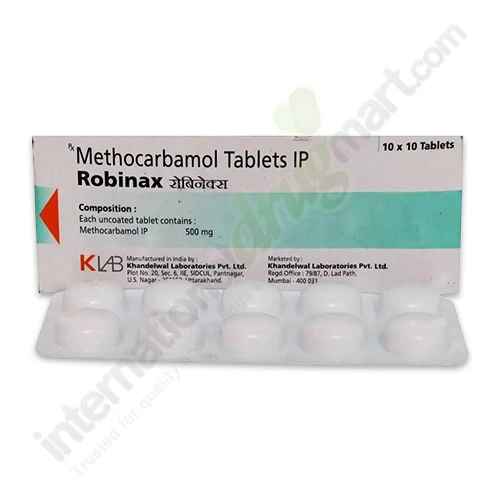
Methocarbamol works on central nervous system (CNS) and relaxes your muscles. Key ingredients help slowdown nerve-activities and also reduce stiffness and pains caused soreness. Methocarbamol does not work upon skeletal muscles though. In fact, this med improves movement of your muscles. It has a mild sedating property; this helps ease anxiety levels.
How to safely use methocarbamol?
Methocarbamol is tolerated quite well. The pill form of this drug is swallowed with 7 ounces of water. You can also take it with milk or a meal, if you experience stomach upset. It takes about half hour for this med to work.
It is a wise thing to tell your caregiving team of prior conditions such as kidney disorders, liver problems or allergies prior to taking methocarbamol. It is essential to tell if you are pregnant or nursing an infant before starting to use methocarbamol.
Risk of adverse effects of methocarbamol
Methocarbamol triggers a few undesired side effects; these include dizziness, migraines, rashes, extreme levels of fatigue, fever and a metallic taste in the mouth. Severe, adverse outcomes can show up in the form of irregular pulse rates and erratic heartbeats, reddening of eyes, turning lightheaded, pain in gastric tract, signs of infections and a few allergies like hives.
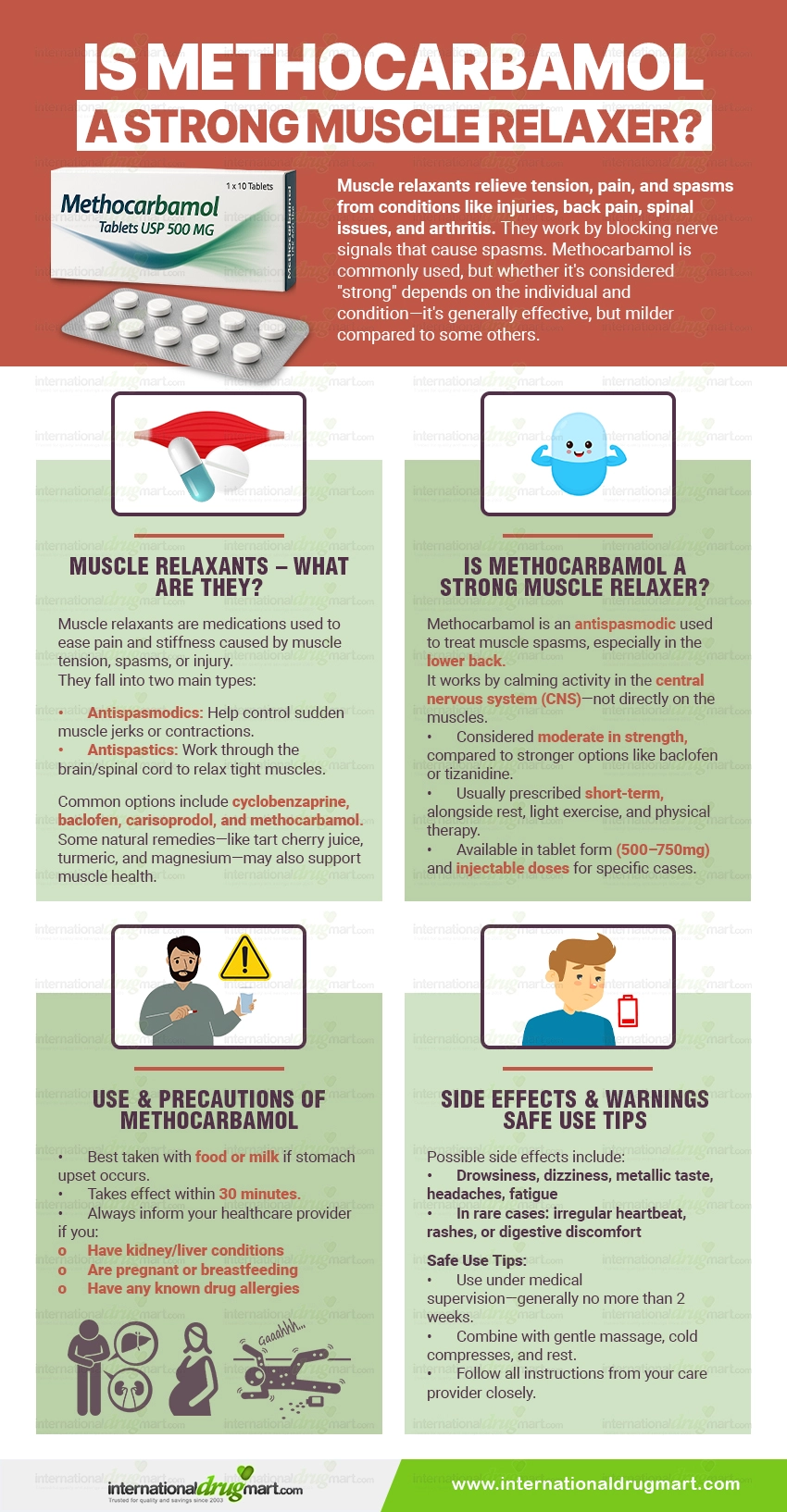
Caveat: Methocarbamol is not used for treating cramping of muscles witnessed during menstrual cycles. Elderly patients – especially those aged above 65 years – are more sensitive to sedative properties of methocarbamol. For such patients, doctors may prescribe a lower dosage strength; low dosing helps avoid accidental falls and spells of confusion.
Methocarbamol dosage for back pain Methocarbamol is commonly prescribed for acute back pain as a muscle relaxant. Typical adult dosage is 1500 mg four times daily during the first 48–72 hours, then reduced to 1000 mg four times daily. Always follow your doctor’s instructions, as dosage may vary based on your condition, age, and other medications. Avoid alcohol and operating machinery.
You are advised to avoid intake of alcohol or sleeping pills while you are using this muscle relaxant. While taking methocarbamol – it is unsafe to drive, work with heavy machines or do tasks needing high levels of alertness. These practices are likely to cause accidents. Lastly, it is important to follow all dosage instructions of your caregiving team.
Disclaimer
Information provided here are only of supplementary nature. Information shared here does not substitute a qualified doctor’s advice. This website is not suggesting intake of this drug as safe or appropriate. Hence it is advised to talk to your doctor before consuming this med or any other drug.