


Indications of depression are distinctive and they include sadness, feeling down, apathy, etc. You may stand depressed when you are under stress. It can be quite stressful to lose a loved one, being unemployed or experiencing marital discord. Depression primarily targets individuals with similar family history. This is where the Selective Serotonin Reuptake Inhibitors (SSRI) appears in the picture. Fluoxetine is one among them. However, do you think Fluoxetine 40 mg is a higher dose? It helps to have more inputs.
Depression is a mood-related condition. It may make you stay hopeless of things both present and future. If you have depression, you tend to lose interest in things you loved to do. Aftereffects of this mental condition can affect quality of your life at home as well as work.
Depression is linked to loss of employment, divorce proceedings, or a death in the family. These apart - chronic conditions like diabetes mellitus, cardiac disorders, autoimmune conditions like cancers, etc. may also cause it. You may not eat well due to lack of appetite. You may also have troubles falling asleep. You may stay weak or fatigued most of the times. As an outcome of these, you may find it hard to stay focused on to concentrate on a thing.
What are Selective Serotonin Reuptake Inhibitors (SSRIs)?
Selective Serotonin Reuptake Inhibitors (SSRIs) are known to increase serotonin levels in your nerve-endings. Synapse are spaces found in-between two nerve-cells. SSRIs inhibit the reabsorption of serotonin and thus make the chemical available for your system. As a result, serotonin remains active in your synapses for long.
Increased availability of brain chemicals like serotonin can enhance your moods and mental faculties. People who have needful neurotransmitters live without major signs of depression or mental imbalance.
In this light, what is fluoxetine?
Fluoxetine forms part of antidepressants of SSRI genre. In your cerebral system, the chief ingredients of fluoxetine boost serotonin activity. By doing this, fluoxetine improves your moods, emotions as well as sleep cycles.
You can get fluoxetine only with a valid medical prescription, issued by a certified / registered physician. In addition, fluoxetine is also taken for other medical conditions such as Obsessive Compulsive Disorder (OBD), eating disorders such as binge-eating / bulimia nervosa, etc.
Fluoxetine is an orally-administered drug. As an oral solution, you get 20 mg / 5 mL, tablets – of strengths ranging from 10 mg, 20 mg to 60 mg, and capsules made of 10 mg, 20 mg and 40 mg. In addition, you get a 90 mg delayed-release variant in a capsule form, and a fixed-dosage combo with olanzapine. The latter is used for treating mental conditions like bipolar disorder, schizophrenia, etc.
Is 40 mg of fluoxetine a high dose and who should use it?
40 mg dosage of fluoxetine is a regular dose for treating mental conditions such as Major Depressive Disorder (MDD), Obsessive-Compulsive Disorder (OCD), Bulimia nervosa-type disorders, panic disorder – to name some.
You can take a dose / day of Fluoxetine. This is what even your caregiver would recommend. Morning or evening hours is ideal to take this med. Your doctor may start dosages at a relatively lower strength of – say, 20 mg per day. This dosage plan is gradually increased till needful remedial outcomes are obtained.
Your system may have tolerance-related issues while using SSRIs – especially, fluoxetine. In such cases, your treating doctor may prescribe a 10 mg dosage instead of 20 mg. This is done to reduce odds of adverse effects. In most cases, a dose of 20 mg - 40 mg – taken on a daily basis - has proven effective to managing mental conditions.
How long does it take for fluoxetine to work? Fluoxetine usually takes time to show results. Many people start noticing small improvements in mood, sleep, or energy within 2 to 4 weeks, but it may take 6 to 8 weeks for full benefit. The brain needs time to adjust to the medicine. Staying consistent with daily doses and regular check-ins with a doctor help track progress and adjust treatment if needed.
A few reports suggest fluoxetine 90 mg delayed-release version – per week is similar to fluoxetine 20 mg taken on a daily basis. In addition, fluoxetine may not directly trigger withdrawal symptoms like other SSRIs. Most other SSRIs are capable of triggering symptoms such as disturbed sleep cycles, dysphoria, increase on body temperature, and nausea.
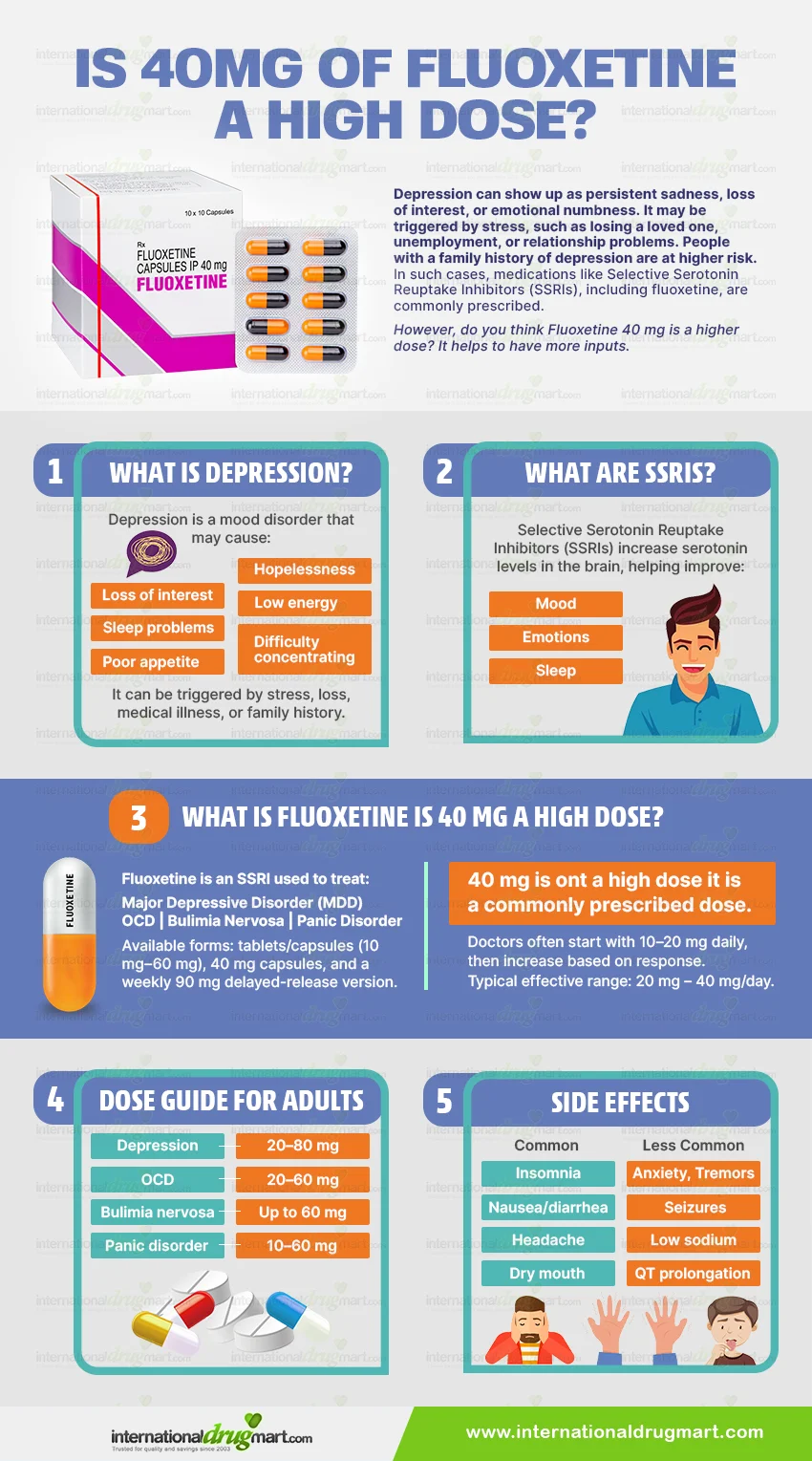
Adult dosing for respective medical conditions
Fluoxetine dose may not be same for all adults. In addition, different medical conditions need dosages of varying strengths. Dosages are of the following order -
Major Depressive Disorder (MDD) – to treat such conditions, fluoxetine dosage of 20 mg per day is offered as starting dose. However, 80 mg per day is the maximum dosage strength as a limitation.
Obsessive-Compulsive Disorder (OCD) - an initial dose of fluoxetine is 20 mg, administered on a daily basis. A 20 mg to 60 mg per day is part of maintenance dose.
Bulimia nervosa – Other forms of therapies – such as cognitive-behavioral therapy – are offered for adults living with bulimia nervosa. The American Psychiatric Association also has issued a few guidelines to treat such conditions. If you see nil / very-little improvement in 6 weeks’ time, treating physicians may prescribe a dose of 60 mg of fluoxetine per day.
Panic disorder – a 10 mg daily is sufficient to treat panic disorder. This is however the typical starting dose. The dosage strength is gradually increased in a week’s time to reach 20 mg - offered per day. The maximum dosage of fluoxetine to treat panic disorder is 60 mg per day.
Side effects of using Fluoxetine
Beware of a few adverse effects fluoxetine is likely to cause. Common among this med’s side effects are sleeplessness or sleep-related problems, nausea, and diarrhea. In some remote cases, other side effects like anorexia, drying of mouth, headaches / migraines, and drowsiness. Along with these, a few individuals may experience anxieties, nervousness, seizures or muscular spasms / weakness. In rare circumstances, bleeding may occur.
Occasionally, Fluoxetine may cause hyponatremia - low sodium levels. This is due to a condition called Syndrome of Inappropriate Antidiuretic Hormone (SIADH). Therefore, the QT cycle of your heartbeat can end up in a delay. Patients with an increased risk of QT prolongation should use this drug with caution.
In order to know more about is 40mg of fluoxetine a high dose, you are advised to talk to your doctor or pharmacist.