
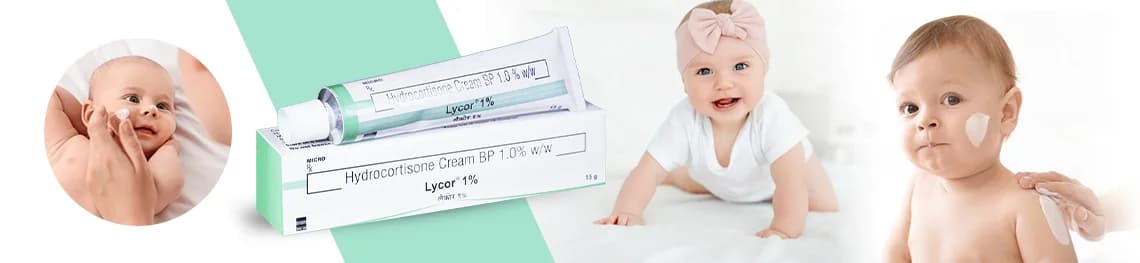

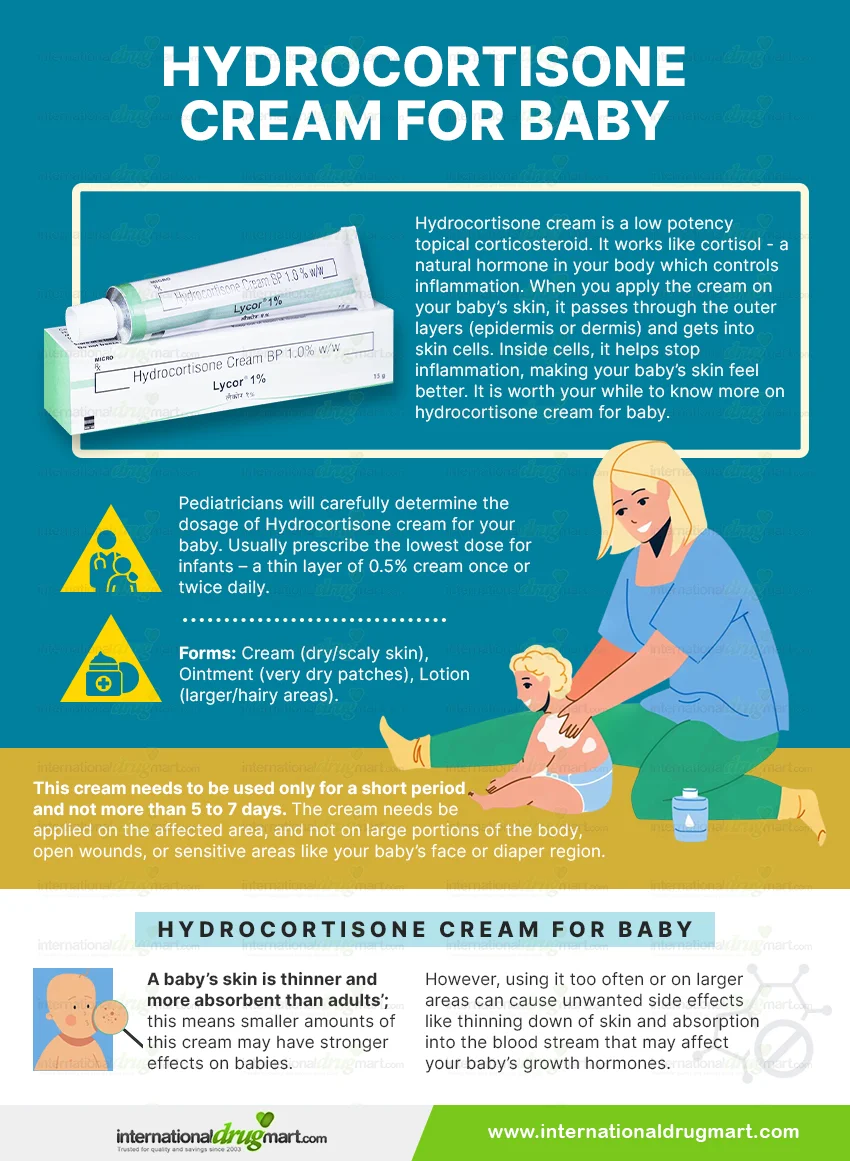
Hydrocortisone cream is a low potency topical corticosteroid. It works like cortisol - a natural hormone in your body which controls inflammation. When you apply the cream on your baby’s skin, it passes through the outer layers (epidermis or dermis) and gets into skin cells. Inside cells, it helps stop inflammation, making your baby’s skin feel better. It is worth your while to know more on hydrocortisone cream for baby.
Many pediatricians do recommend Hydrocortisone cream to treat mild skin conditions like eczema, diaper rash, or allergic reactions in babies. Hydrocortisone is available in different strengths - specifically formulated for infant use; including mildest 0.5% concentration (considered safe on babies). The more commonly-available is at 1% strength (used for mild rashes); and there is a stronger 2.5% version. The stronger version is used strictly as per your doctor’s advice.
Pediatricians will carefully determine the dosage of Hydrocortisone cream for your baby. For infants, doctors mostly prescribe the lowest dosage – a thin layer of 0.5% cream, used once or twice a day.
This cream is available in three main forms - cream (ideal for dry, scaly skin), thicker ointment (better for extremely dry patches), and lotion (best suited for larger or hairy areas of the body). The type chosen depends on where and how bad your baby’s skin condition is.
This cream needs to be used only for a short period, and not more than 5 to 7 days. The cream needs be applied on the affected area, and not on large portions of the body, open wounds, or sensitive areas like your baby’s face or diaper region
Hydrocortisone cream for baby
Hydrocortisone cream – a mild steroid that helps with skin issues like inflammation, redness, itching, and irritation. It is available over-the-counter in low strength - of say, 0.5% and is commonly used by adults for eczema or other allergic reactions. However, great care must be taken while applying hydrocortisone cream to infants.

A baby’s skin is thinner and more absorbent than adults’; this means smaller amounts of this cream may have stronger effects on babies. For this reason, Hydrocortisone cream must never be used on infants without medical advice.
However, using it too often or on larger areas can cause unwanted side effects like thinning down of skin and absorption into the blood stream that may affect your baby’s growth hormones. Caveat: You always need to check with your doctor before using Hydrocortisone cream.
When should you use Hydrocortisone cream on a baby?
Pediatric dermatologists often suggest Hydrocortisone cream for several skin conditions. Some common uses in pediatric care include: Eczema (atopic dermatitis) - This chronic condition causes dry, itchy patches that can become inflamed and uncomfortable. A thin layer of Hydrocortisone cream can help break the itch-scratch cycle that worsens eczema. Severe diaper rash - While most diaper rashes respond well to barrier creams like zinc oxide, particularly inflamed cases may benefit from short-term Hydrocortisone use under medical supervision.
Allergic contact dermatitis - Skin reactions to detergents, fabrics, or other irritants often improve with Hydrocortisone treatment. Insect bites and stings: The cream can reduce swelling and itching from bug bites when applied properly.
How to apply Hydrocortisone cream onto your baby?
When using Hydrocortisone cream on your baby, always begin by washing your hands thoroughly with soap and water to prevent contamination. Use clean fingertips to apply a pea-sized amount of the cream in a thin layer directly on the affected area.
Lightly rub it in with small, circular movements until the cream is fully absorbed into the skin. Also, particularly be careful to avoid contact with the eyes, mouth, and genital area, unless your pediatrician specifically instructs you to apply.
Never cover the treated area with bandages, tight clothing, or diapers (especially if the cream is used in the diaper area), as covering can increase how much of the medication is absorbed and raise the risk of side effects.
After applying the cream, wash your hands again to prevent spreading the medication to other parts of your baby’s body or to yourself.
Side effects of Hydrocortisone cream
While Hydrocortisone is usually safe for babies when used as directed; overuse or a prolonged use may however lead to severe side effects. These may include changes in your baby’s skin color (light patches or discoloration), appearance of stretch marks, slow wound healing rates and a greater chance of skin infections.
In rare instances, overuse of this cream has caused hormonal imbalances. You need to stop using the cream and contact your baby's doctor right away if you notice unusual signs such as bruising, extreme level of dryness, or a rash that only gets worser.
When not to use Hydrocortisone cream to infants?
There are a few situations wherein Hydrocortisone cream must never be used on your baby. For instance, in cases of fungal infections – such as ringworm, athlete's foot, or yeast infections - Hydrocortisone may actually make such conditions worse. These infections often appear as bright-red rashes with well-defined borders.
Similarly, viral infections like chickenpox, herpes (cold sores or genital herpes), etc. may get aggravated with the use of Hydrocortisone; chief chemicals of this cream can suppress immune response needed to fight invading virus.
Bacterial infections marked by symptoms such as pus, yellow crusting, or rapidly spreading rashes, like in impetigo, also require antibiotics, and not steroid creams. It is important to avoid applying Hydrocortisone onto open wounds, sores, or broken skin, as such practices can enhance the odds of irritation or infection.
Additionally, if your baby has a known allergy to Hydrocortisone or any of the ingredients of the cream, you need to avoid it use completely. Lastly, in case of undiagnosed rashes, use of Hydrocortisone cream without knowing the cause of the underlying-infection may worsen the condition.
Hydrocortisone cream can be useful for treating common skin issues in kids, but it is important to use it in the right way. Always check with your child's doctor before putting it on, and follow their advice based on the specific skin problem.
Keep the possible side effects in mind. If you have a problem, stop using the cream immediately and contact you doctor. By using Hydrocortisone cream correctly, you can take steps to protect your baby’s tender skin and keep your little one comfortable.
Can I use hydrocortisone cream on shingles rash, Hydrocortisone cream is not usually recommended for shingles rash. Shingles is caused by the varicella-zoster virus, and corticosteroid creams may irritate the blisters or slow healing. Antiviral medicines and soothing treatments, like cool compresses or calamine lotion, are typically used instead. Always check with a healthcare provider before applying any steroid cream to shingles.
Disclaimer
Information provided here are only of supplementary nature. Information shared here does not substitute a qualified doctor’s advice. This website is not suggesting intake of this drug as safe or appropriate. Hence it is advised to talk to your doctor before consuming this med or any other drug.