


There are many types of eye drops. Those which are made of saline are similar to salinity levels of your eyes. These work to remove friction inside your eye; such eye drops can serve as lab-made tears. They ease irritation as well as itchiness in your eyes. Often, eye drops are made of many chemicals – based on ocular conditions, doctors prescribe drops having antihistamines, steroids or non-steroidal anti-inflammatory drugs (NSAIDs) in them. Can you use eye drops for allergies? It is a vital thing to have additional inputs.
A few forms of eye drops may not have chemicals in them. Such eye drops are used mainly for making artificial tears. It is a common thing to observe active ingredients like solutes of a lesser concentration to trigger osmotic reactions, gels of a high viscous nature, ions of bicarbonates, etc. Each of these ingredients functions in a unique way; your eye doctor (read: ophthalmologist) may use multiple options to understand what works well for your eye-based conditions.
On the other hand, antibiotic-based or steroidal eye drops are widely used for treating infection inside your eyes. Such drops are endowed with prophylactic capabilities; these can help arrest likely infections. These are mostly used soon after a surgery in your eye(s). Conditions like conjunctivitis are treated with eye drops having antibiotic properties. These can kill harmful microbes like infection-causing bacteria inside eyes.
Best eye drops for allergies
There are eye drops with antihistamine properties; the key ingredient is either a non-steroidal anti-inflammatory drug (NSAID) or an antagonist of histamines. These drops are known to suppress cellular responses to allergy-causing agents such as dust, mites, pollen or other such foreign particles. The items that can trigger an allergic condition are labelled as allergens.
Typical allergic reactions showing up in your eyes include watery discharge from your eyes, reddening or inflammation (puffing or swelling). These may occur along with nasal blockage incessant sneezing and / or a runny nose. Most forms of allergies may make your conjunctiva (a wafer-thin membrane) to get irritated or undergo an inflammation. This causes a condition called pink-eye. It may make your eyes go teary.
The best eye drops for allergies are antihistamine-based. You can use them for managing discomforts like drying of eyes, teary eyes as well as itchiness. Such eye drops can block chemicals called histamines; these chemicals are the root cause for allergic reactions like itchy sensations as well as reddening of eyes.
Antihistamine-based eye drops such as emedastine difumarate, azelastine hydrochloride, etc. are widely prescribed. These are also eye drops based on non-steroidal anti-inflammatory drugs. Ketorolac is one of the popular NSAID-based drops used to treat eye-based allergies. Itchiness and other allergic reactions tend to go away in about 50 minutes from the time of using such drops.
You may encounter a few side effects like a burning sensation or a stinging feeling; these are common side effects. These may go away on their own once your body is used to these eye drops. In some cases, corticosteroid-based eye drops are prescribed. These are however never used for a longer span of time.
Nasal spray for dry eyes, such as Tyrvaya, works by stimulating the trigeminal nerve to increase natural tear production. Suitable for chronic dry eye sufferers, it offers a practical alternative to eye drops. Applied twice daily, this prescription spray helps maintain eye moisture and improve overall eye comfort, making it a convenient choice for continuous relief.
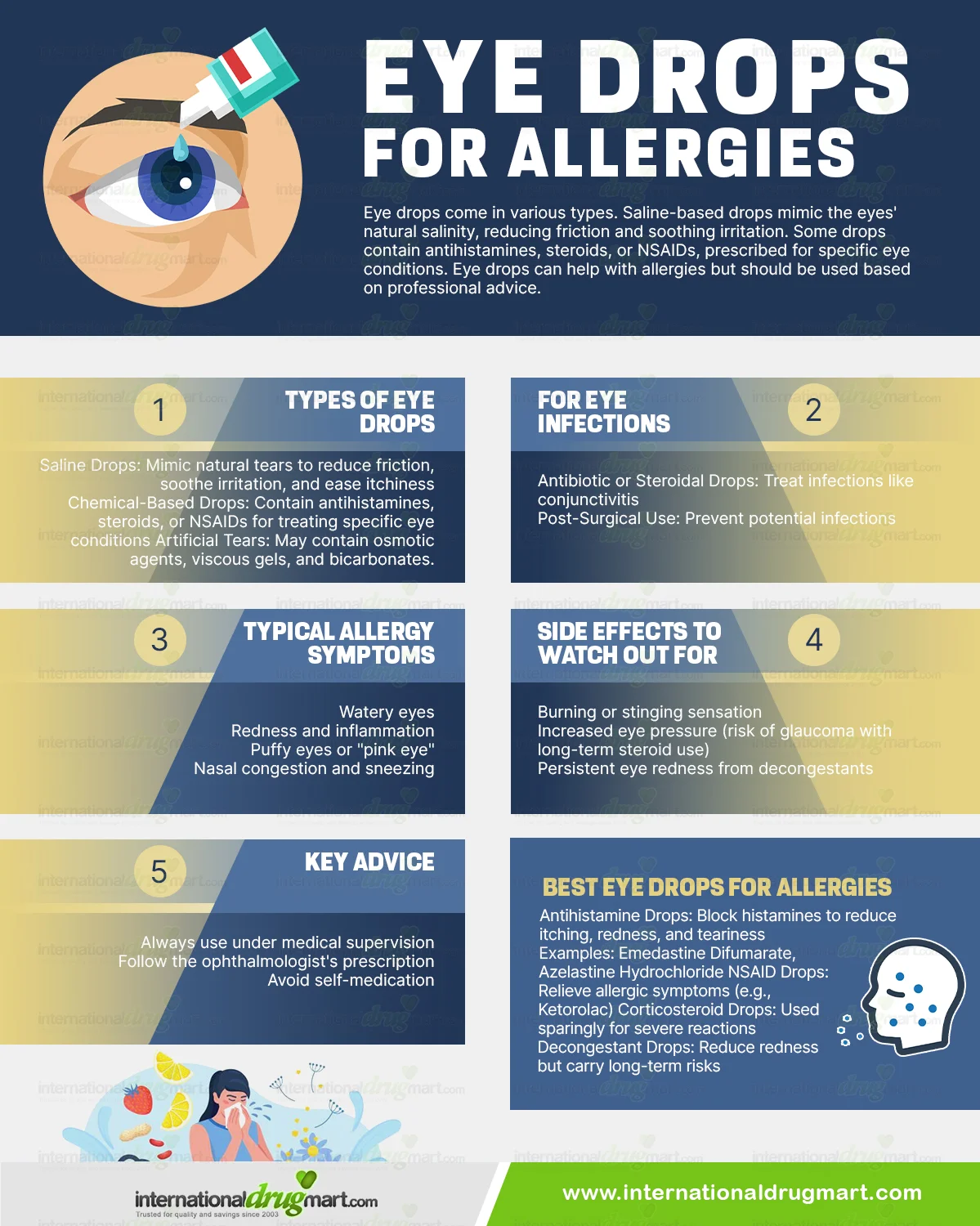
Continued use of steroidal eye drops can lead to eye conditions like increased pressure level inside your eyes. If unattended to, added ocular pressure can cause hypertension; this may further trigger serious eye conditions like glaucoma.
There are also a few eye-drops that come under the decongestant category of meds. These meds can narrow the arteries carrying blood to your eyes. These bear a few long-term risks like turning your eyes red almost permanently.
Above all, eye drops are always used under the supervision or as per the advice of a qualified eye doctor i.e., an ophthalmologist. Those who try using eye drops for allergies are likely to encounter a few risks. It is one of the reasons pharmacies insist on issuing such drops based on prescriptions from a certified medical professional.
How to Select Eye Drops for Allergies and Dry Eyes
In search of relief, people will naturally look for treatments that could help with both allergy and dryness. The majority of the eye drops marketed for allergy and dry eyes are essentially lubricants or antihistamines. Allergies make the eyes itch, turn red, and water; dryness makes the eye feel gritty and tired: hence the treatment drops may be good for either or both of these conditions.
Typically, allergic conjunctivitis is first treated with artificial tears. They are very mild and suitable for daily use since they merely serve to wash out the allergen-dust, pollen, or whatever it is. Nevertheless, if the irritation goes on, your eye doctor may recommend something stronger. Combination drops relieve the dryness while stopping the histamines that make the eyes itch and hurt, so to speak; for many people, this double-barrel approach provides rapid relief.
Note that not all drops are the same. Some are for temporary use, others for chronic conditions. This is the reason why taking your eye doctor’s directions into consideration is imperative before venturing into a random eye drop.
The Best Eye Drops for Children's Allergies
Parents often ask: "What are the best eye drops for children with allergies?" Being more sensitive than adults, very careful selection has to be exercised. For children, the best eye drops for allergies will generally be preservative-free, mild, and intended specifically for use on younger eyes. These drops will sometimes come in single-dose vials in order to maintain sterility and safety.
The typical symptoms risking rubbing, redness, and watery discharge characterize children's allergies. If untreated, the symptoms may interfere with their daily activities and even hinder their school performance. The antihistamine eye drops for children provide a fast relief for redness and itching. However, most doctors would first go for mild lubricating eye drops so he can tell if the child can react well to them.
For children, the golden rule is never to self-medicate. Parents must get a prescription from a pediatrician or an approval from an eye specialist. This is because some eye drops may be suitable for an adult but not for a young patient.
Should I Use Allergy Drops or Dry Eye Drops?
Things do get confusing. Should one go for anti-allergic drops, or anti-dry drops? The question is really one of the symptoms. If eyes feel sandy or dry, or begin to strain after being subjected to excessive display time, lubricating tears will do best. But for burning, itching eyes, and redness that come in with allergy season, an antihistamine drop will do. Occasionally, both conditions exist at the same time. This is where these combination eye drops really benefit, keeping eyes wet and blocking the chemicals that exacerbate allergies. Side Effects and Safety Concerns While eye drops are systemic and safe, side effects exist. A few may feel the stinging and burning sensation lasts for a while. A few others may feel nauseated, while some experience temporary blurry vision for a couple of minutes right after placing in them. These symptoms, however, wear off within a few minutes. If they do not, you should stop dropping the drops and ask for a second opinion from the doctor.
Never a lifetime supply of decongestant drops, especially for children. The longer the redness is being treated, the more it seems to be naked in hot retainers. Steroidal eyedrops are very effective, but their use must be maintained only for a short duration. Long-term use becomes hazardous with raised intraocular pressure and the further onset of glaucoma.
How to Use Eye Drops Safely
Wash your hands- to keep germs away.
Tilt Head Back- Pull lower eyelid slightly to create a pocket.
One drop is enough- Don't pour more into the eye.
Avoid touching the tip of the bottle- So that there would be contamination.
Follow your doctor's instructions- Do not continue the application without their advice.
Apply to both adults and children alike. Following these rules ensures that the eye drops work effectively and safely.
Final Thoughts
Relief of itchy, red, or dry eyes is often the matter of the right eye drops. For the adult population, the best eyedrops for allergies and dry eyes would be a fairly balanced combination of lubricants and antihistamines. For the pediatric population, the best eyedrops for children with allergies must be mild, preservative-free, and should be recommended by the doctor.
These eyedrops are, at the end of the day, mere tools-against-the-clock for actual cure. Bumping away from pollen, smoke, or even pet dander is also a barrier to allergic reactions.
Disclaimer
Information provided here are only of supplementary nature. Information shared here does not substitute a qualified doctor’s advice. This website is not suggesting intake of this drug as safe or appropriate. Hence it is advised to talk to your doctor before consuming this med or any other drug.