
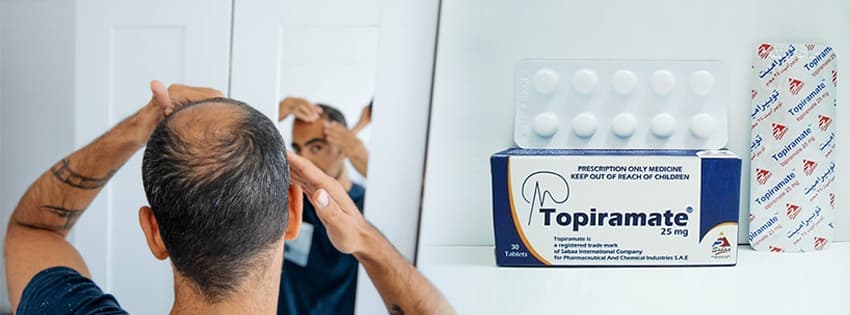

Topiramate is one among the different medications approved by the US FDA for the treatment of epilepsy, a neurological disorder characterized by recurrent seizures. Different types of seizures that can be managed with the medication include partial-onset seizures, primary generalized tonic-clonic seizures, and Lennox-Gastaut syndrome, in adults and children. By virtue of the possible long term use of the medication patients often pose the following question - does topiramate cause hair loss? Here are answers to the question in addition to a detailed look at the drug.
Overview of topiramate
In addition to its antiepileptic properties, topiramate is also used for the prevention of migraine headaches in adults. It is prescribed for individuals who experience frequent and severe migraines and may not respond well to other treatments. The precise mechanism of action of topiramate is not fully understood, but is believed to involve multiple mechanisms, explained in detail in subsequent section. Topiramate is prescription only medication, and the dosage and duration of treatment is determined on the basis of the individual patient's needs. Topiramate may have potential side effects and may interact with other medications, and its necessary to follow the guidance of healthcare professionals.
Mechanism of action of topiramate
As outlined above, the actual mechanism of action of topiramate is not fully understood, but it is believed to involve multiple mechanisms including the following:
- Enhancement of inhibitory neurotransmission: Topiramate enhances the activity of gamma-aminobutyric acid, which is an inhibitory neurotransmitter in the brain. It is believed to increase the concentration of GABA in the brain by several mechanisms, including increasing GABA release, enhancing GABA binding to its receptors, and inhibiting the breakdown of GABA.
- Inhibition of excitatory neurotransmission: Topiramate also inhibits the activity of excitatory neurotransmitters in the brain, such as glutamate. It is believed to block voltage-gated sodium channels, involved in the transmission of nerve signals, leading to a reduction in the release of excitatory neurotransmitters.
- Modulation of ion channels: Topiramate interacts with various ion channels in the brain, including sodium channels, calcium channels, and potassium channels. These interactions contribute to the antiepileptic effects by regulating the flow of ions across neuronal cell membranes, leading to changes in neuronal excitability.
- Carbonic anhydrase inhibition: Topiramate inhibits the activity of carbonic anhydrase, an enzyme involved in the regulation of acid-base balance in the body. This inhibition contributes to the diuretic effect of topiramate and is also involved in its ability to prevent migraines.
- Modulation of neurotransmitter receptors: Topiramate interacts with various neurotransmitter receptors in the brain, including those for dopamine, serotonin, and norepinephrine. These interactions contribute to effects on mood, appetite, and other neurobehavioral functions.
Possible side effects of topiramate
All medications come with the possibility of undesirable effects and topiramate, like all medications, may trigger side effects. Commonly reported side effects of topiramate include the following:
- Central nervous system side effects - drowsiness, dizziness, fatigue, difficulty concentrating, confusion, and impaired coordination. Some individuals may also experience mood changes, such as irritability or depression.
- Gastrointestinal side effects - nausea, vomiting, diarrhea, abdominal pain, and loss of appetite.
- Weight loss and decreased appetite – that may be desirable in certain cases, but may also be unwanted in others.
- Cognitive and language-related side effects – a small section of individuals may experience difficulty with memory, word-finding difficulties, or other cognitive impairments while taking topiramate.
- Tingling or numbness – a tingling or numbness in the extremities, such as the hands and feet, known as peripheral paresthesia.
- Vision-related side effects – a small section of individuals may experience vision-related side effects, such as blurred vision, double vision, or other visual disturbances.
- Mood changes - though topiramate is used to treat mood disorders such as bipolar disorder, it can also cause mood changes in some individuals, including mood swings, depression, or anxiety.
- Metabolic side effects - such as increased levels of acid in the blood metabolic acidosis and changes in electrolyte levels.
- In addition to the above, other less common effects of topiramate include outbreak of rashes, kidney stones, decreased sweating, or changes in taste.
All individuals are unlikely to experience side effects from topiramate, and may vary in severity and frequency.
Does topiramate cause hair loss?
Yes, hair loss, also known as alopecia has been reported as a potential side effect of topiramate in certain users. Hair loss associated with topiramate is generally rare and occurs only in a small percentage of users. The exact mechanism by which topiramate may cause hair loss is not fully understood, but it is believed to be related to the drug's effect on the metabolism and nutritional status of the body. It is worth noting that not all individuals who take topiramate will experience hair loss, and the severity and frequency of hair loss can vary from person to person.
Is the hair loss from topiramate permanent?
Hair loss associated with topiramate is typically reversible once the medication is discontinued or the dosage is adjusted. In most cases, hair will regrow after the underlying cause of the hair loss is addressed, and this may involve stopping or reducing the use of topiramate or changing to an alternative medication. The severity and duration of hair loss can vary from person to person, and certain individuals may experience more prolonged or persistent hair loss than others. It may take several weeks or even months for hair to regrow after stopping topiramate or adjusting the dosage. In rare cases, however, hair loss may persist even after discontinuing the medication.
Who is at risk of hair loss from topiramate?
Hair loss from topiramate is generally rare, and certain factors may increase the risk of developing hair loss while on topiramate, including the following:
- Stronger dosages: Hair loss from topiramate may be more likely at higher dosages. Patients recommended higher dosages may have an increased risk of experiencing hair loss.
- Prolonged use: Longer or extended duration of topiramate is also linked to higher risk of hair loss.
- Personal susceptibility: Some individuals may be more genetically predisposed to developing hair loss while on topiramate. Individuals with a family history of hair loss or other risk factors may have an increased risk of experiencing hair loss from topiramate.
- Other factors: Other factors such as individual variability in drug metabolism, underlying health conditions, and concomitant use of other medications may also affect the risk of hair loss from topiramate.